262-250-7566
 Request a quote
News & insights.
What we’re learning, what we’re seeing, and the occasional story from the floor: packaging trends, supply-chain notes, and compliance updates we wish we’d known sooner.
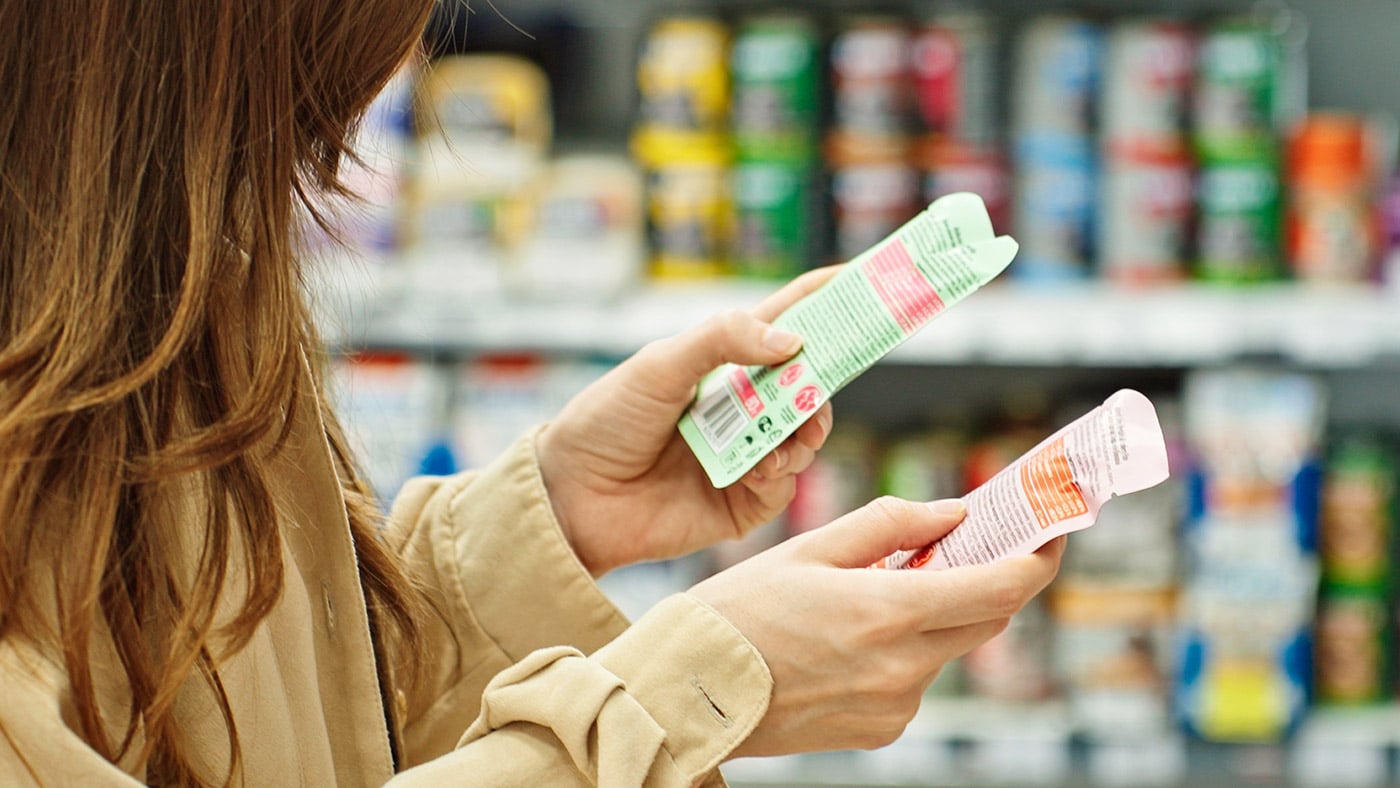
What Food Packaging Trends Mean for Your Food Packaging

The Fastest-Growing Food Categories Are Asking More of the Package
A strong product in the wrong package loses to a good product in the right one. That was the message under nearly every slide at IDDBA 2026's session on retail growth. The biggest food packaging trends this year aren't necessarily about new materials. They're about shoppers who want food that does more for them, fits a fragmented day, and suits a smaller household.
IDDBA (the International Dairy Deli Bakery Association) named two growth platforms at retail: health and wellness and snacking. Using research from Dairy Management Inc. (DMI) and Hartman Group, the session showed that both are large, underserved and moving quickly.
Here's what the data says, and what it means for the cups, tubs, pouches and labels your product ships in.
Health and Wellness Is a $275 Billion Gap Between What Shoppers Buy and What They Want
Consumers spend more than $550 billion a year on health and wellness food, beverages and supplements. More than half say they're dissatisfied with what they're getting. IDDBA, citing ZS and Euromonitor, puts the resulting opportunity at over $275 billion through 2029.
Shoppers no longer buy for a single benefit like "high protein." They bundle needs into what IDDBA calls demand moments:
- Hydration Station: hydration
- Grow & Perform: athletic performance, sustained energy, bone health
- Healthy Heart & Weight: weight management, heart health
- Systems Supercharge: digestive health, preventive immunity
- Mental & Emotional H&W: mood, fast-acting energy
- Speedy Recovery: palliative immunity, sleep
- Beauty & Balance: skin, hair, nails, oral health
The emotional side matters as much as the physical. In IDDBA's research, 93% of consumers agreed that physical health and emotional wellbeing are connected.
Women's health is a $153 billion opening
DMI's What Women Really Want research singled out women's health as a $153 billion opportunity, built on five focus areas: sleep, weight management, muscle development, bone health and skin health. Products are already moving. IDDBA showed a collagen kefir smoothie, a hyaluronic acid drink mix and a collagen oatmeal cup. DMI's concept testing surfaced roughly 40 high-scoring ideas for a "dairy department of the future," spread across cups, tubs, pouches, bottles and snack bags.
What this means for packaging: a functional benefit only sells if the shopper sees it in the brief moment they spend at the shelf. Claims like "5g collagen" or "10g protein" need room, contrast and a clean print, which makes decoration part of the product strategy, not the last step.
Snacking Is Now Half of How America Eats
According to Hartman Group's Snacking 2026 report, 49% of all eating occasions are now snacks. Meals are breaking apart:
- 44% of consumers skip a meal at least weekly (57% of Millennials, 48% of Gen Z).
- 38% turn snacks into a meal at least weekly, a habit the industry now calls "snealing" (56% of Millennials, 45% of Gen Z).
- 94% say that when they need a snack, they look for something quick and convenient.
Hartman's research also found that snacks carry emotional weight. People reach for them for pleasure, nourishment, distraction and energy, often while balancing indulgence against wellness. Looking ahead, 45% want more nutritious snacks, 38% want snacks that are easier to eat, and 34% want snacks that are less processed.
IDDBA put the packaging takeaway on the slide in plain words: easy-to-open, single-serve and resealable packaging boosts cues of freshness and portability and supports today's fragmented snacking. If a product is going to be eaten in a car, at a desk or between meetings, the package has to make that easy.
What It Looks Like When Packaging Turns a Dessert Into a Snack
IDDBA's innovation spotlight made the case better than any chart. Cheesecake is a $1.5 billion U.S. category that grew 6% last year, yet it hadn't changed much in decades: high in sugar, often made with artificial ingredients, and not built for snacking.
Wonder Monday reformulated it to be low sugar, low carb, high protein and gluten-free. Then it put each cheesecake in a clear, single-portion cup with the nutrition claims printed big on the band: 2g sugar, 4g net carbs, 10g protein. The brand reports more than 2 million cheesecakes sold. The recipe made it healthier. The package made it a snack.
Three Shifts Behind This Year's Food Packaging Trends
Smaller households. Married couples without children (29.4%) and single adults without children (29.0%) together make up about 58% of U.S. households. Family-size packs fit fewer homes than they used to.
New channels. Circana data shared at IDDBA shows online's share of food and beverage dollars rising from 3.2% in 2022 to 5.4% over the latest 52 weeks, with club and mass channels also gaining. Traditional grocery fell from 42.8% to 39.0%. A package that ships to a doorstep faces different abuse than one that sits on a shelf.
Faster rotation. Spending is shifting from foodservice toward retail, and 59% of consumers say they love exploring new foods. Gen Z and Millennials want to see new items in bakery and deli monthly. Brands that launch more often need packaging they can get to market quickly.
Food Packaging Trends at a Glance
| Trend | What shoppers want | Packaging implication |
| Functional health benefits | Protein, collagen, gut health, sleep support | Decoration with room and clarity for benefit claims |
| Women's health | Products built for sleep, bone, muscle and skin needs | Targeted graphics that speak directly to her |
| Snacking and "snealing" | Quick, portable, satisfying | Single-serve cups, easy-open lids, resealable closures |
| Smaller households | Less waste, right-sized portions | Smaller pack sizes and multi-serve options that reseal |
| Online and club growth | Delivery that arrives intact; value packs | Containers and closures built for shipping and bulk |
| Frequent innovation | Something new monthly or seasonally | Stock containers with fast decoration changes for limited runs |
IDDBA summed up the packaging priorities in four parts: graphics, size, structure, and packaging as a marketing vehicle. With 41% of consumers now using AI tools to plan meals, the shelf is no longer the only place a product gets discovered. But it's still where the package closes the sale.
Where ILLING Fits In
Every trend above lands on the same question: can your packaging keep up with how fast your product needs to change? We've been answering that question since 1927, on the shelf and behind the counter.
Retail tubs for the categories driving growth. Round and square tubs are one of the things we do best. They're the go-to format for prepared salads, snacks, dips and confections, which are exactly the grab-and-go, single-serve items IDDBA flagged. We help brands match the tub, lid and size to the product, the filling line and the shelf.
Back-of-house and institutional packaging. Behind every deli case is the B2B packaging that supplies it: bottles, jars, pails, drums and totes for ingredients, sauces, bulk product and commercial kitchens. This is where ILLING's roots run deepest. As spending shifts from foodservice to retail and fresh departments take on more prep, the packaging the shopper never sees matters as much as the package they do.
Sourcing. As a manufacturer's representative, we work with hundreds of vetted domestic and global manufacturers, so the container fits the product, the line and the budget instead of whatever happens to be in stock.
Decoration. Our in-house team handles silk screen printing, shrink sleeving, and pressure-sensitive and RFID labeling under the same roof as sourcing. One team owns how your protein claim or limited-edition flavor looks on the shelf, with tighter quality control and faster turnaround on short runs.
Stocking agreements and just-in-time warehousing. With about 500,000 square feet of warehousing across Minnesota, Illinois, Wisconsin and Georgia, we hold your packaging under a stocking agreement and release it when your line needs it. A launch that moves up or a spike in demand doesn't have to stall production.
We're family-owned, and we've stayed that way for nearly 100 years. The people you work with this year will still be here when your next product launches.
FAQs
What are the biggest food packaging trends in 2026?
The biggest food packaging trends in 2026 are single-serve and resealable formats for snacking, clearer on-pack communication of health benefits, smaller pack sizes for smaller households, and packaging built for online and club channels. IDDBA identified health and wellness and snacking as the two largest growth platforms at retail.
Why is single-serve packaging growing?
Snacks now make up 49% of eating occasions, and 94% of consumers want snacks that are quick and convenient, according to Hartman Group. Single-serve packaging makes a product portable, portion-controlled and easy to eat on the go, which fits how people eat today.
How should packaging communicate health benefits?
Put the benefit where shoppers see it first, in large, high-contrast type on the front of the pack. Specific claims such as grams of protein or sugar work better than general wellness language. Make sure any claim is reviewed for regulatory accuracy before it goes to print.
What is "snealing"?
"Snealing" is when a consumer replaces a meal with snacks. Hartman Group found that 38% of consumers do it at least weekly, rising to 56% of Millennials. It's pushing brands toward snack packaging that delivers meal-level satisfaction and protein.
How can a brand launch new flavors faster without new packaging tooling?
Pair a stock container with in-house decoration such as shrink sleeves, labels or screen printing. The container stays the same, so only the graphics change for each flavor or limited run. That shortens lead times and keeps minimum order quantities manageable.