262-250-7566
 Request a quote
News & insights.
What we’re learning, what we’re seeing, and the occasional story from the floor: packaging trends, supply-chain notes, and compliance updates we wish we’d known sooner.
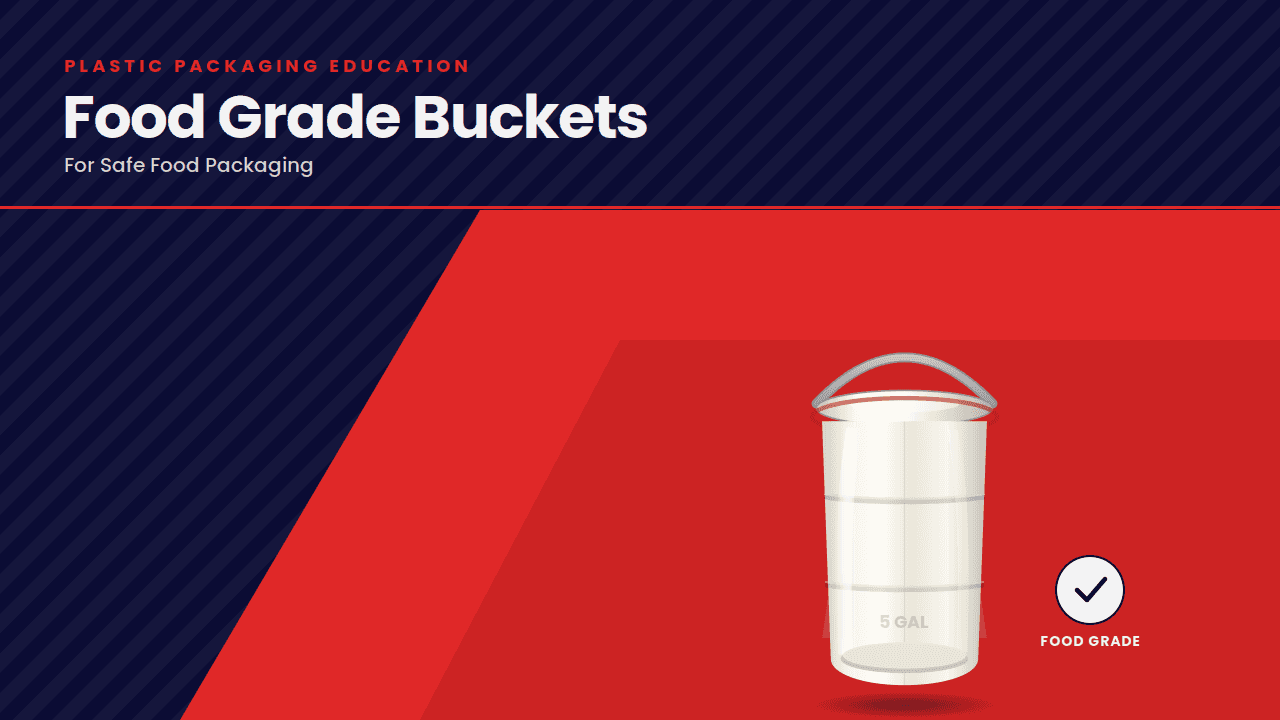
Food Grade Buckets for Safe Food Packaging

Table of Contents
Not all plastic buckets are created for the same purpose. Food grade buckets are specifically designed to support safe food contact, product integrity, and dependable performance throughout storage, handling, and transportation. While many containers may look similar on the shelf, the materials, manufacturing standards, and closure systems behind a true food grade bucket make all the difference and choosing the wrong one carries real consequences for your product and your brand.
This guide breaks down what food grade buckets are, how to choose the right material for your application, and the specific factors that should drive your packaging decision. If you want broader context on pails and other container formats first, start with our Complete Guide to Rigid Packaging.
What Makes a Bucket Food Grade?
A food grade bucket is manufactured using materials approved for direct food contact and produced under standards designed to support product safety throughout the supply chain.
Most food grade buckets are made from high density polyethylene (HDPE) or polypropylene (PP) materials widely used across the food industry because of their durability, chemical resistance, and consistent performance across a range of applications and environments.
However, the resin alone is only part of the equation. A complete food grade packaging system also includes compatible lids, seals, and closure components that work together to protect the product inside. A bucket made from an approved material paired with an incompatible lid is not a food grade packaging system, it is an incomplete one.
Manufacturing environment and process controls matter as well. Food grade buckets are produced under conditions that reduce the risk of contamination and ensure that the finished container meets applicable food safety standards from the start.
Choosing the Right Material
Different food products require different packaging solutions, and material selection is where many buyers start getting specific.
HDPE is the most common choice for food grade buckets used with ingredients, dry goods, sauces, bakery products, and other applications where durability and impact resistance are the primary requirements. It handles a wide range of products reliably and is available in a broad range of sizes and configurations.
Polypropylene is often the better choice when products involve higher filling temperatures or when the application requires additional heat resistance. Hot fill applications where a product is filled at elevated temperature and sealed typically call for polypropylene rather than HDPE.
The right material depends on the product itself, the filling process, storage conditions, and how the container will be handled and transported. Neither material is universally better, the right answer depends on the full picture of how the bucket will be used.
Factor | HDPE Bucket | Polypropylene Bucket |
Material | High-density polyethylene (HDPE) | Polypropylene (PP) |
Weight | Lightweight | Lightweight |
Chemical resistance | Broad compatibility | Broad compatibility |
Heat resistance | Standard temperature range | Higher heat tolerance |
Impact resistance | High | High |
Food contact approval | FDA/USDA approved | FDA/USDA approved |
Common applications | Ingredients, dry goods, sauces, bakery | Hot fill products, specialty foods |
Closure compatibility | Requires matched lid/seal system | Requires matched lid/seal system |
Why Food Grade Packaging Matters
Food grade packaging helps maintain product quality from the point of production through final distribution. The right container helps reduce contamination risks, supports product freshness, and provides dependable protection at every stage of the supply chain.
Businesses rely on food grade buckets to support:
- Product integrity from fill to shelf
- Food safety compliance requirements
- Reliable performance during transportation
- Efficient storage and handling operations
- Consumer confidence in the finished product
When packaging is selected properly, it becomes a core part of protecting both the product and the brand behind it. When it is selected carelessly, the costs show up in product loss, compliance issues, and customer complaints.
Food Grade Doesn't Mean One Size Fits All
One of the most common misconceptions buyers bring to this category is that all food grade buckets are interchangeable, that any approved container will work for any food application.
That is not the case. Filling temperature, product acidity, storage environment, closure requirements, and distribution conditions all influence how a container performs in practice. A bucket that works well for ambient dry ingredients may not be appropriate for hot fill products, highly acidic contents, or applications with demanding stacking or transit requirements.
Selecting food grade buckets should always involve evaluating the complete packaging system material, size, closure type, and performance requirements, not simply choosing a container because it carries a food grade designation.
The Factors That Should Drive Your Decision
The food grade bucket decision comes down to a short list of questions. Work through them in order:
- What is your product? Dry goods, liquids, sauces, and pastes each carry different packaging requirements that influence both material selection and closure configuration.
- What are your filling conditions? Hot fill products require containers rated for elevated temperatures. This often points to polypropylene over HDPE.
- What are your storage and distribution conditions? Temperature ranges, stacking loads, and handling conditions all affect which container will perform consistently over time.
- What are your closure requirements? The lid, seal, and closure system must be compatible with the bucket and designed for how the product will be accessed, resealed, and transported.
- What regulatory requirements apply? Food contact applications carry specific compliance standards. The full packaging system, not just the bucket, should be verified against applicable food safety requirements.
If you work through these in order, the right answer usually becomes clear. The mistake buyers make starts with cost. For food contact applications, compliance and compatibility come first. Cost is the tiebreaker once the safe and appropriate options have been identified.
Why Packaging Selection Matters
The right food grade bucket does more than contain a product. It helps maintain quality, supports operational efficiency, and provides confidence throughout the supply chain from the production floor to the end customer.
At ILLING, we work closely with customers to understand their products, processes, and packaging goals before recommending a solution. From food grade pails and tubs to specialty packaging components, our focus is on delivering dependable performance and long-term value.
Why Choose ILLING?
For nearly 100 years, ILLING has helped businesses identify packaging solutions built around their specific requirements. Our team takes the time to understand the full application helping customers navigate material selection, closure compatibility, operational requirements, and long-term packaging performance before a recommendation is ever made.
Because business IS personal, every project receives the extraordinary attention needed to protect products, support operations, and build lasting success.
FAQs
What Is a Food Grade Bucket?
A food grade bucket is a container manufactured from materials approved for direct food contact, typically HDPE or polypropylene and produced under standards designed to support product safety throughout storage, handling, and transportation.
What Is the Difference Between HDPE and Polypropylene Food Grade Buckets?
HDPE is the most common choice for dry goods, sauces, and general food applications where durability and impact resistance are the priority. Polypropylene is better suited for hot fill applications and products requiring higher heat resistance.
Can Any Plastic Bucket Be Used for Food Storage?
No. Not all plastic buckets are approved for food contact. Food grade buckets are specifically manufactured from approved materials under controlled conditions. Using a non-food grade container for food products can create contamination risks and compliance issues.
Do Food Grade Buckets Come with Matching Lids and Seals?
They should. A food grade packaging system includes compatible lids, seals, and closure components not just the bucket itself. An approved bucket paired with an incompatible lid is not a complete food grade solution.
How Do I Know Which Food Grade Bucket Is Right for My Product?
Start with your product type, filling conditions, storage environment, closure requirements, and any applicable food safety regulations. Working through those factors in order rather than starting with cost will point you to the right container for your application.