A century of service, built on trust, and we're just getting started.

Phone 262-250-7566
Toggle menu
ILLING Packaging
  • Chat
    Chat
  • Account
  • 0
    Your Cart
ChatRequest a quote
  • Packaging
    • Buckets & Pails
      • Metal Buckets
      • Pail Accessories
      • Plastic Buckets
      • Plastic Tubs
    • Drums & Barrels
      • Fiber Drums
      • Plastic Drums
      • Steel Drums
      • Drum Accessories
    • Metal Containers
      • Aerosol Cans
      • Aluminium Beverage Cans
      • Aluminum Bottles
      • Cone Top Cans
      • F-Style Cans
      • Flat Top Cans
      • Metal Accessories
      • Metal Paint Cans
      • Metal Tins
    • Plastic Containers
      • Plastic Bottles
      • Plastic Jugs & Handlewear
      • Plastic Jars
      • Plastic Paint Cans
    • Caps & Closures
      • Beverage Closures
      • Child Resistant CRC
      • Continuous Thread
      • Dispensing Closures
      • Metal Closures
      • Plastic Closures
      • Pumps
      • Specialty Closures
      • Sprayers
    • Glass Containers
      • Glass Bottles
      • Glass Jars
    • Totes & IBC's
      • Rebottled Totes
    Need to place an order? Phone262-250-7566 Have questions or need help placing an order? ContactContact Us
  • Why ILLING?
    • Our Process
    • History
    • Team & Culture
    • Awards & Accolades
    • Sustainability
  • Decoration
    • Silk Screen
    • Pressure Sensitive Labeling (PSL)
    • Pail Labeling
    • Shrink Sleeve
    • Digital Printing
  • Services
    • Stocking Agreements & JIT
    • Credit Terms
    • Global Sourcing
    • Design
    • Custom Molds
    • Smart Packaging & RFID
    • Packing & Assembly
  • Industry
    • Agricultural & Pest Control
    • Automotive
    • Food & Beverage
    • Building Materials
    • Chemicals
    • Contract Packaging
    • Cosmetics & Beauty
  • Knowledge
    • Packaging 101
    • Decoration 101
    • Manufacturer's Reps
    • Packaging Materials Guide
    • Specification Template
    • Frequently Asked Questions
  • Contact
    • Locations
    • Events & Trade Shows
    • Careers
    • Request Consultation
ChatRequest a quote
  • Account
  • Phone 262-250-7566
  • Chat
    Chat

News & insights.

What we’re learning, what we’re seeing, and the occasional story from the floor: packaging trends, supply-chain notes, and compliance updates we wish we’d known sooner.
  • Packaging
  • Blog/News
  • Buyer's Education
  • Case Studies
✕

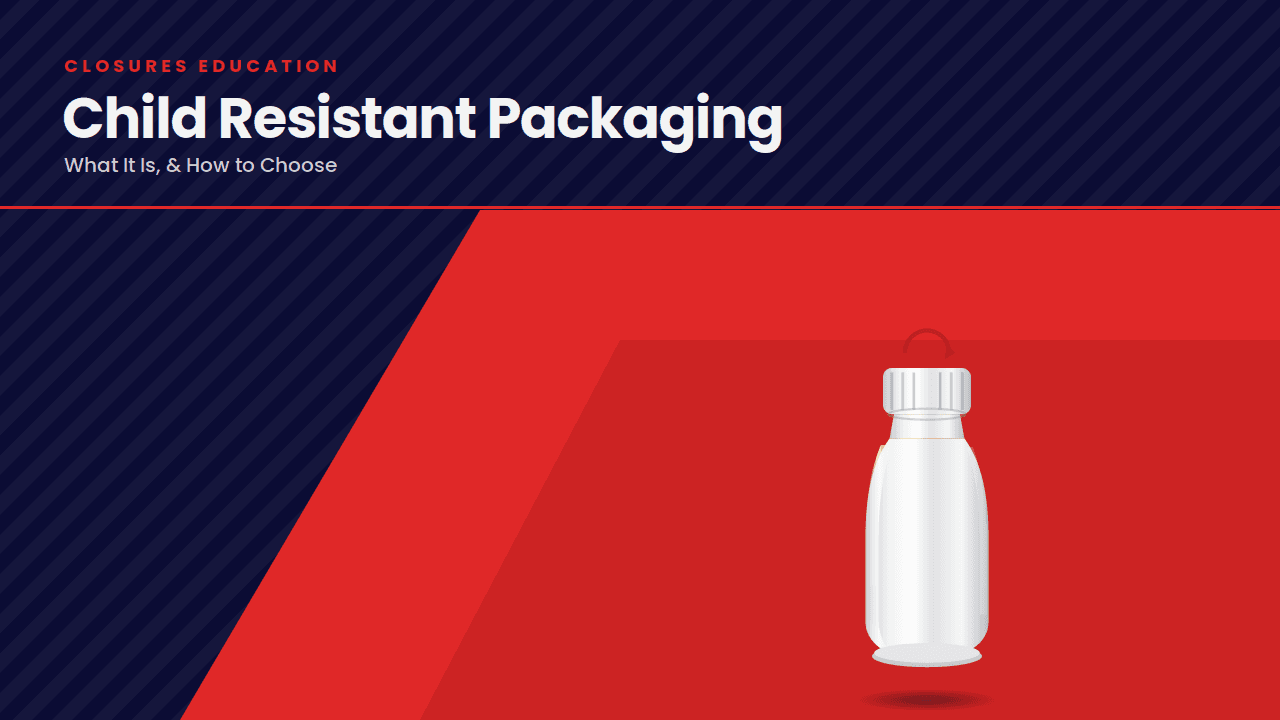
Child Resistant Packaging: What It Is, & How to Choose

Child Resistant Packaging: What It Is, & How to Choose

Kathleen Lococo Kathleen Lococo Packaging
August 13th, 2026 5 minute read

Listen to article
Audio generated by DropInBlog's Blog Voice AI™ may have slight pronunciation nuances. Learn more

Table of Contents

  • What Is Child Resistant Packaging?
  • Why Child Resistant Packaging Matters
  • Understanding Regulatory Requirements 
  • Industries That Commonly Use Child Resistant Packaging
  • Choosing the Right Child Resistant Packaging System
  • Why Choose ILLING?
  • FAQs

Child resistant packaging plays an important role in protecting consumers, supporting regulatory compliance, and helping reduce the risk of accidental access to potentially hazardous products. In many product categories, it is not only a safety measure but also a legal requirement. For businesses packaging pharmaceuticals, household chemicals, pesticides, and other regulated products, selecting the right solution means understanding when it is required, what qualifies as compliant packaging, and how certification applies to the complete packaging system.

Getting these details right is critical to product safety, regulatory compliance, and long-term brand protection. This guide breaks down what these packaging systems are, who needs them, how regulations apply, and what to consider when selecting a compliant solution for your product and application.

What Is Child Resistant Packaging?

Child resistant packaging is designed to be significantly more difficult for young children to open while remaining accessible for adults. It is important to understand that child resistant does not mean childproof these packaging systems are designed to create an additional barrier by requiring actions that are more challenging for children under five years old to perform.

Common child resistant mechanisms include:

  • Push and turn closures — require simultaneous downward pressure and rotation to open
  • Squeeze and turn designs — require lateral compression before the cap will rotate
  • Alignment systems — require multiple coordinated movements before the package can be opened
  • Blister and foil packaging — used in pharmaceutical applications to limit access to individual doses

Each mechanism is designed to present a meaningful barrier to children while ensuring adults can access the product without difficulty.

Why Child Resistant Packaging Matters

For products that may pose a risk if accidentally accessed, packaging safety is just as important as the product itself. The right packaging design helps reduce the likelihood of accidental exposure while providing an additional layer of protection throughout storage, transportation, and consumer use. 

Beyond consumer safety, compliant packaging also helps businesses meet regulatory requirements and support responsible product stewardship. For regulated product categories, non-compliant closures and containers can create significant liability exposure, regulatory action, and reputational risk making this one of the most important packaging decisions a business makes before bringing a product to market. The cost of getting it wrong is far greater than the cost of getting it right from the start.

Understanding Regulatory Requirements 

In the United States, child resistant packaging requirements are governed by the Poison Prevention Packaging Act (PPPA) and enforced by the Consumer Product Safety Commission (CPSC).

These regulations require compliant packaging for a variety of product categories, including certain pharmaceuticals, household chemicals, pesticides, and supplements. Requirements vary by product type and formulation, which makes it important to evaluate packaging obligations early in the selection process rather than after a product has already reached market.

Product CategoryGoverning RegulationKey Requirement
Prescription pharmaceuticalsPPPA / CPSCChild resistant packaging required by default
OTC medications (many)PPPA / CPSCRequired unless senior-friendly exemption applies
Household chemical productsPPPA / CPSCRequired depending on composition
Pesticides and herbicidesPPPA / EPARequired for most residential-use products
Dietary supplements (certain)PPPA / CPSCRequired for iron-containing supplements above thresholds
Cannabis productsState regulationsVaries by state; child resistant often required

Because regulations are product-specific and subject to change, verifying requirements with a qualified regulatory resource or packaging partner is always recommended before finalizing a packaging system.

Industries That Commonly Use Child Resistant Packaging

These packaging systems are widely used across several regulated industries. Understanding where they are most commonly required helps businesses evaluate their own obligations early in the process.

Common industries and applications include:

  • Pharmaceutical: Prescription medications, many OTC products, aspirin, iron-containing supplements, and certain vitamins
  • Household chemicals: Cleaners, solvents, and specialty chemical formulations depending on product composition
  • Agricultural and pest control: Pesticides, herbicides, and insecticides distributed in residential environments
  • Cannabis: Adult-use and medical cannabis products in states where child resistant packaging is required by law
  • Industrial and specialty chemicals: Products with hazardous ingredients that may require additional handling precautions

Choosing the Right Child Resistant Packaging System

Selecting child resistant packaging involves more than choosing a cap or closure. The container, closure, liner, and overall packaging system must work together to deliver both safety and performance. In many cases, these systems must undergo standardized testing to verify effectiveness and adult accessibility and changes to either the closure or container can impact certification requirements, making compatibility a critical consideration during the specification process.

  1. Confirm your regulatory requirements. Determine whether your product category requires compliant closures under PPPA, EPA, or applicable state regulations before selecting components.
  2. Evaluate the complete packaging system. Child resistant performance depends on the interaction between the container, closure, and liner not any single component alone.
  3. Verify testing and certification. Compliant systems must pass standardized testing protocols. Confirm that the solution you select has been tested and certified as a complete unit not just individual component.
  4. Consider adult accessibility. These systems must also be usable by adults, including seniors. Some product categories allow senior-friendly packaging as an alternative when requested by the consumer.
  5. Plan for compatibility early. Changes to container shape, material, or closure can affect child resistant certification. Locking in the complete system early reduces the risk of costly redesigns before launch.

The businesses that navigate these compliance requirements most successfully are those that treat the packaging decision as a system from the start not an add-on chosen at the end of the product development process. Selecting the container, closure, and liner together, with certification in mind, is the most reliable path to a compliant and market-ready solution.

Why Choose ILLING?

For nearly 100 years, ILLING has helped businesses across pharmaceutical, chemical, agricultural, and industrial markets identify child resistant packaging solutions that support compliance, product integrity, and long-term performance.

Because business IS personal, we approach every project with Extraordinary Attention helping customers find dependable packaging solutions that provide confidence from production through distribution.

FAQs

What Is Child Resistant Packaging?

This type of packaging is designed to be significantly more difficult for children under five years old to open, while remaining accessible for adults. It is not childproof it creates an additional barrier through mechanisms like push-and-turn closures, squeeze-and-turn designs, and alignment systems that require coordinated movements most young children cannot easily perform.

What Products Require Child Resistant Packaging?

In the United States, the Poison Prevention Packaging Act (PPPA) requires compliant packaging for many pharmaceuticals, household chemicals, pesticides, and certain dietary supplements. Requirements vary by product type, formulation, and intended use. Cannabis products may also require compliant closures depending on state regulations. Because requirements are product-specific, verifying your obligations early in the packaging selection process is strongly recommended.

What Is the Difference Between Child Resistant and Childproof Packaging?

Child resistant packaging is designed to significantly reduce the likelihood of a child accessing the contents not to make access impossible. The term "childproof" implies a guarantee that no child can open the package, which is not an accurate or regulatory-recognized standard. These systems are tested to verify they are difficult for children under five to open while remaining accessible for adults.

Who Enforces Child Resistant Packaging Requirements in the United States?

The Consumer Product Safety Commission (CPSC) enforces these requirements under the Poison Prevention Packaging Act (PPPA) for most consumer products. The Environmental Protection Agency (EPA) has additional requirements for pesticide products. State-level regulations particularly for cannabis may add further requirements depending on where a product is sold.

Does Child Resistant Packaging Need to be Tested and Certified?

Yes. These systems must pass standardized testing protocols to verify that they are difficult for children to open and accessible for adults. Testing is conducted on the complete packaging system container, closure, and liner together not individual components. Changes to any element of the system may require retesting, which is why selecting a compatible complete system from the start is important.

« Back to Blog

Related Articles

Continuous Thread: How Do They Work?

Continuous Thread: How Do They Work?

6 minute read

June 25th, 2026

What Is the Difference Between Continuous Thread & Lug Metal Caps?

What Is the Difference Between Continuous Thread & Lug Metal Caps?

5 minute read

June 26th, 2026

Why Are Specialty Closures Important?

Why Are Specialty Closures Important?

7 minute read

June 29th, 2026

Top reads

Worth your time.

Bylines

Meet the writers.

  • Keith Hemmig
  • Allen Holzbauer
  • Mike Kust
  • Kathleen Lococo

Subscribe

Stay in the loop.

Get in touch

Got a packaging question?

Tell us what you need. We'll be in touch quickly.

Reach Out
×

Ready to

Stop Managing Packaging & Start Relying on It?

Request Consultation
Services
  • Shrink Sleeve
  • Silk Screen
  • Pressure Sensitive Labeling (PSL)
  • Pail Labeling
  • Digital Printing
FAQ/Packaging
  • Knowledge Center
  • Packaging 101
  • Sustainability
  • Events & Trade Shows
  • Frequently Asked Questions
Company
  • Why ILLING?
  • Our Process
  • Our Team
  • Careers
  • Contact Us
  • Terms & Conditions
Subscribe to our newsletter

Updates, products, and more. The Illing way.

Follow Us
Trustpilot
ILLING Packaging

Driven by Experience.

Forward by Design.

Top Workplaces award — ILLING Packaging honoree
footer_logo_2 footer_logo_3

© 2026 ILLING Packaging. All Rights Reserved.

Terms of Use · Privacy Policy · Accessibility Statement · California Consumer Privacy Act (CCPA) Opt-Out Icon Your Privacy Choices