262-250-7566
 Request a quote
News & insights.
What we’re learning, what we’re seeing, and the occasional story from the floor: packaging trends, supply-chain notes, and compliance updates we wish we’d known sooner.
Bucket vs. Pail: What's the Difference?

Table of Contents
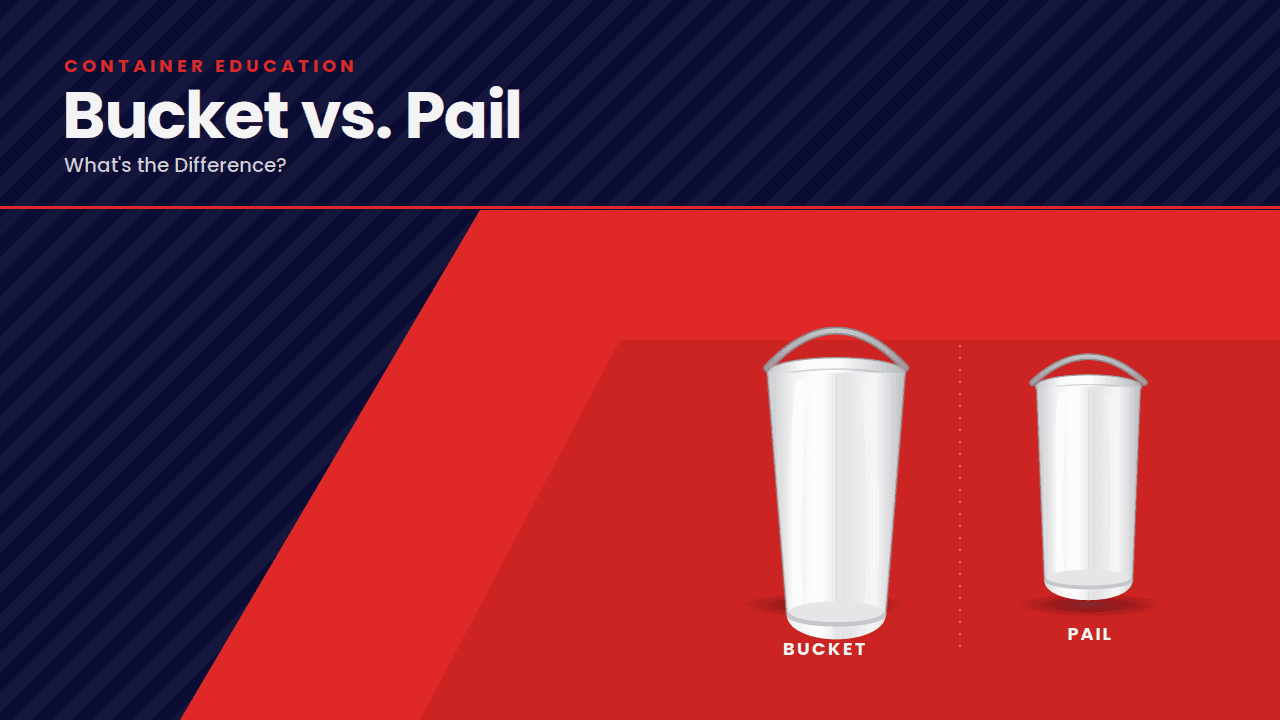
The bucket vs. pail question comes up constantly in industrial packaging and the answer is simpler than most people expect.
In most cases, a bucket and a pail refer to the same type of container, designed for storing, transporting, and protecting products. The difference between a bucket vs. pail is usually in terminology, not the container itself. In consumer settings, “bucket” is more common. In industrial and commercial packaging, “pail” is the term most often used by manufacturers, specification documents, and regulatory standards. Whether you call it a bucket or a pail, the goal is the same: secures storage, dependable handling, and reliable product protection.
This guide explains the bucket vs pail distinction in plain language, covers the container types available, and helps buyers identify what to look for when choosing the right one. If you want broader context on how to spec a container from scratch, see our guide to How to Evaluate a Packaging Supplier.
Bucket vs. Pail: What Each Term Actually Means
The terms get used loosely across industries, so it’s worth being precise about what each one means in practice and why the bucket vs pail distinction matters more in some contexts than others.
In consumers and retail settings, “bucket” is the common term the hardware store, the paint aisle, the cleaning supply shelf. In industrial and commercial packaging, “pail” is the standard terminology used by manufacturers, distributors, and specification documents. A 5-gallon HDPE container in a hardware store is a bucket. The same container in a packaging catalog is a pail.
The container itself doesn’t change based on what you call it. What changes are the context, the specification of language, and the expectations around performance, compliance, and regulatory requirements that come with industrial use. When a food manufacturer specifies a food-grade pail, they’re working within a defined set of material, manufacturing, and compliance standards that a consumer-grade bucket doesn’t meet regardless of how similar they look on the outside.
Term | Where It’s Used | Typical Context |
Bucket | Consumer, retail, household | Hardware stores, cleaning supplies, general storage |
Pail | Industrial, commercial, packaging | Food processing, chemicals, coatings, agricultural products. |
Where Are Pails and Buckets Used?
Pails and buckets are used across a wide range of industries because they offer a practical and dependable packaging solution for both liquid and solid products. The bucket vs. pail terminology shifts by industry, but the applications are consistent. Common uses include:
- Food ingredients and food products
- Paints and coatings
- Chemicals and industrial products
- Agricultural products
- Cleaning and sanitation solutions
- Manufacturing materials
The right container helps protect quality while supporting safe storage, transportation, and day-to-day operations. In regulated food, chemicals, hazardous materials, the pail specification also must meet applicable regulatory requirements, which a consumer-grade bucket typically won’t satisfy. That is the practical reason the bucket vs pail distinction matters: it signals whether the container was manufactured and tested to an industrial standard or simply sold off a retail shelf.
What Types of Pails Are Available?
Not all pails serve the same purpose. Understanding the options is part of getting the bucket vs pail decision right because within the pail category, the opening style, material, and configuration each affect how the container performs and what applications it’s suited for.
Plastic Open Head Pails – Removable lid for easy filling, access, and cleaning. Available in round and square designs. Standard for food, chemical, and industrial applications. UN-rated options available for regulated materials.
Plastic Tight Head Pails – Fixed top with bung openings for fill and dispense. Better leak resistance than open head the choice for liquid chemicals, solvents, and products requiring a fully sealed container throughout the supply chain.
Plastic Screw Top Pails – UN-certified tamper-evident screw on lid with resealable performance. Ideal for food, chemical, and retail applications where repeated opening and reclosure is required without compromising seal integrity.
Steel Pails – Open and tight head steel pails for coatings, solvents, petroleum products, and materials requiring maximum containment security. Available lined or unlined, UN-rated in 1-to-6-gallon sizes.
A wide range of sizes, closure options, colors, and accessories spouts, bungs, plugs, and opening tools are available to support specific application requirements. The right configuration depends on what's going in the container, how it will be filled, and how it will be used and resealed in the field.
Choosing the Right Pail or Bucket
Whether the bucket vs. pail terminology matters to you or not, selecting the right container comes down to the same set of practical decisions. Getting this right at the spec stage prevents the problems that show up in production, in transit, or at audit.
Product compatibility. The container material has to be compatible with the product formulation. HDPE handles most food and chemical applications well, but aggressive solvents and reactive products may require a lined steel pail or a different resin. Confirm compatibility, don't assume it based on material type alone. A container that works fine for one product can fail on another with similar characteristics.
Opening and closure configuration. Open head pails provide full container access for thick products, granules, and easy-fill applications. Tight head pails are better for liquids where leak resistance and a sealed closure matter throughout the supply chain. Closure type also determines which accessories, pumps, spouts, tamper-evident seals, can be used with the container. These decisions are connected and need to be made together.
Regulatory requirements. For food products, the container and its components must meet FDA food-grade standards. For chemical and hazardous materials, UN/DOT ratings may be required for transport. A pail that works perfectly for a non-regulated product may not satisfy the requirements for a regulated one, confirm before the order is placed, not after a compliance issue surfaces.
Size and volume. Pails are typically available in sizes ranging from 1 gallon to 7 gallons, with 5-gallon being the most common in both industrial and consumer applications. The right size depends on your fill volume, handling requirements, and how the container will be used downstream. Oversizing adds cost and weight; under sizing creates operational inefficiency.
The Difference That Actually Matters for a Buyer
A bucket from a hardware store isn't a substitute for an industrial pail. Consumer-grade buckets aren't manufactured to food-grade, chemical-compatibility, or UN/DOT standards. For any industrial or commercial application food processing, chemical storage, regulated transport, the container needs to be specified and sourced as a packaging component, not purchased off a retail shelf.
The closure matters as much as the container. A pail without the right lid, liner, or closure system isn't a complete packaging solution. Compatibility between container, closure, and product must be confirmed before production begins not after quality failure surfaces.
Where ILLING Fits In
For nearly 100 years, ILLING has helped customers identify pail and bucket solutions that fit their products, operations, and long-term goals. We offer plastic and steel pails across a wide range of sizes, configurations, and closure types open head, tight head, screw top, UN-rated, food-grade, lined, and unlined and work with customers to confirm that the full system is specified correctly before production begins.
Because business IS personal, we don't just fill orders. We work through the application with your product compatibility, closure selection, regulatory requirements so the container is never the problem.
FAQs
What Distinguishes a Food Grade Bucket?
A food grade bucket is made from FDA-approved plastic with no toxic dyes or additives, and it's labeled "food safe" or marked with a cup-and-fork symbol. Non-food grade buckets may contain harmful chemicals that can leach into your food.
What Materials are Industrial Pails Made From?
Most industrial pails are made from high-density polyethylene (HDPE) or steel. HDPE handles most of the food and chemical applications well. Steel pails are used for coatings, solvents, petroleum products, and materials requiring maximum containment. Lined steel options are available for products where the steel itself is not compatible with the formulation.
What accessories are available for pails?
A range of accessories can be used with pails depending on the application, including spouts, bungs, plugs, pumps, tamper-evident seals, and opening tools. Closure accessories must be compatible with the pail's opening style and neck finish. Selecting the right accessories at the specification stage ensures the complete packaging system works together as intended.
Where are pails and buckets commonly used?
Pails are used across a wide range of industries including food processing, paint and coatings, chemicals, agricultural products, cleaning and sanitation, and manufacturing. The container format works for both liquid and solid products and is practical across applications that require safe storage, reliable transport, and day-to-day handling.
What is an UN-Rated Pail and When Do I Need One?
An UN-rated pail has been tested and certified to meet United Nations performance standards for the transport of hazardous materials. If your product is classified as a hazardous material under DOT regulations, an UN-rated container is typically required for transport. Standard pails, even industrial-grade ones, do not satisfy this requirement unless they carry the UN certification mark.