262-250-7566
 Request a quote
News & insights.
What we’re learning, what we’re seeing, and the occasional story from the floor: packaging trends, supply-chain notes, and compliance updates we wish we’d known sooner.
What are the Benefits of Using Rebottled Totes?

Table of Contents
Buying a brand-new IBC tote isn’t always necessary, and it isn’t always the smarter choice either. The benefits of using rebottled totes come down to a simple idea: reuse the part that’s still structurally sound and replace the part that touches the product.
In most cases, the benefits of using rebottled totes come down to three things: lower cost than new, a fresh inner bottle that hasn’t held any prior product, and faster turnaround than full manufacturing. A rebottled tote isn’t a compromise between new and used, it’s a specific combination of both, built around reusing what still performs and replacing what matters most for product safety.
This guide explains what rebottling means, covers the benefits of using rebottled totes, and helps buyers understand when this option makes sense for their product. If you want broader context on plastic packaging generally, see our guide to What Are the Advantages of Plastic Containers?
What Does “Rebottled” Actually Mean?
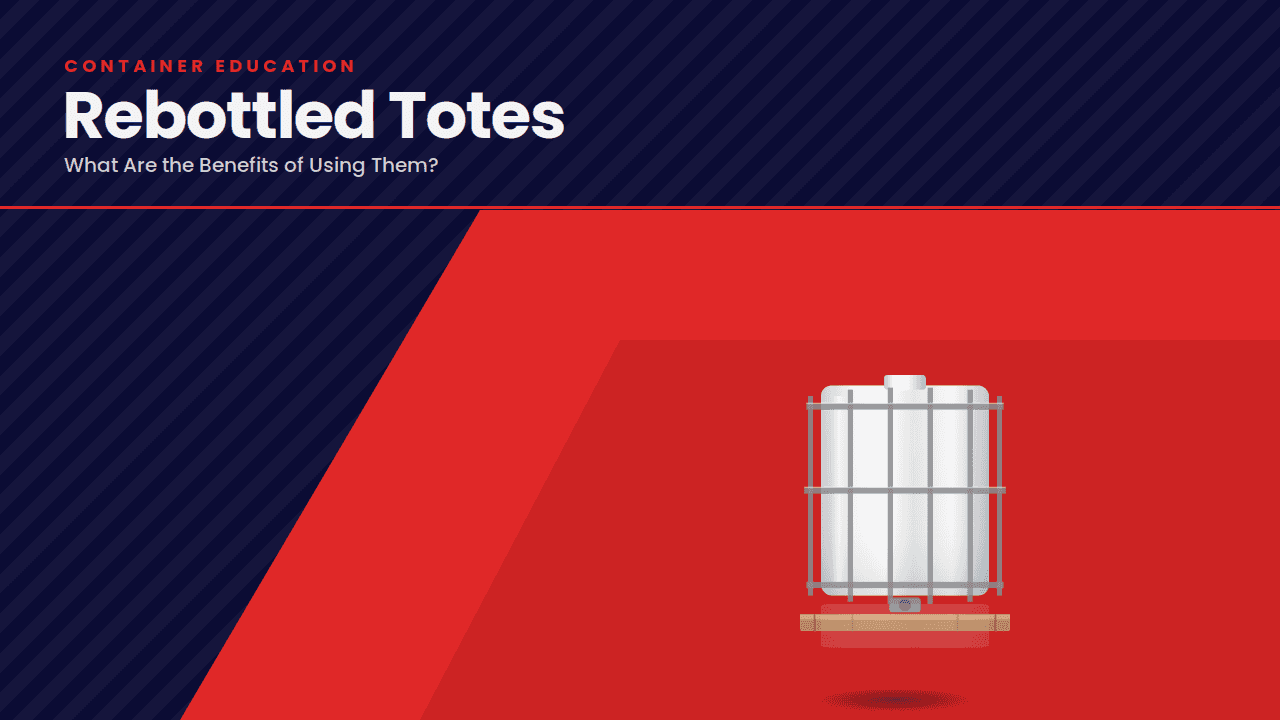
A rebottled tote starts with a used IBC, the steel cage and pallet base and replaces the inner plastic bottle with a brand-new one, rather than reusing the original bladder. The cage goes through inspection and any necessary repair, while the bottle is swapper entirely.
That’s a meaningfully different process than simply reconditioning a tote, which typically means cleaning and recertifying the existing bottle for reuse without replacing it. Rebottling exists because the cage, the expensive, durable, steel component often has plenty of service life left, while the plastic bottle inside is the part most likely to carry contamination risk, odor retention, or wear from its previous contents. Understanding this distinction is the first step toward recognizing the benefits of using rebottled totes over either alternative.
Why Brands Choose Rebottled Totes
The benefits of using rebottled totes come down to a combination of cost, safety, and speed that neither a fully new tote nor a fully reconditioned one offers on its own.
Lower cost than new is the most immediate benefit. Reusing an inspected steel cage instead of manufacturing one from scratch cuts a significant portion of the cost of a brand-new IBC, without cutting corners on the part of the tote that contacts the product.
A genuinely fresh bottle addresses the biggest concern buyers have with reused packaging. Since the inner bladder is new, there’s no risk of cross-contamination, retained odor, or residue from whatever the tote previously carried, a meaningful advantage over simply reconditioning the original bottle.
Faster turnaround rounds out the case. Rebottling an existing cage is quicker than manufacturing a new tote end to end, which matters when lead times are tight and a fully new unit would create a bottleneck.
Reduced material waste is a real sustainability benefit as well. Reusing a structurally sound steel cage instead of manufacturing a new one reduces the resource footprint of the tote overall, without asking a brand to compromise on the part that touches their product.
Where Are Rebottled Totes Used?
The benefits of using rebottled totes make them a practical fit anywhere bulk liquid transport is needed, and full new-tote cost isn’t justified by the application. Common uses include:
- Non-hazardous industrial chemicals and cleaning solutions
- Agricultural liquids and fertilizers
- Water treatment and processing chemicals
- Automotive fluids and lubricants
- Food-grade liquids, where certification allows
- Bulk transport for internal or closed-loop supply chains
The right rebottled tote protects product integrity across storage and transport while meaningfully reducing cost compared to a new unit. In regulated categories, hazardous materials, certain food-grade applications – the benefits of using rebottled totes still depend on proper certification of both the cage and the new bottle, which is why sourcing from a supplier that manages that documentation matters.
What Actually Determines Whether a Rebottled Tote Is Right
Once the basic case for rebottling is understood, the decision comes down to handful of factors: cage condition, bottle certification, product compatibility, and regulatory rating.
Cage condition has to be verified through inspection before reuse. A cage with structural damage or corrosion isn’t a candidate for rebottling regardless of cost savings, since the cage still carries the physical load of the filled tote.
Bottle certification confirms the new inner bottle meets the same performance standards as one shipped on a brand-new tote, including UN rating where applicable.
Product compatibility still has to be confirmed for the new bottle’s resin, the same as it would for any new plastic container – rebottling doesn’t change the chemistry requirements involved.
Regulatory rating applies if the product is classified as hazardous for shipping. A rebottled tote used for a regulated product needs documentation showing both the cage and the new bottle meet the applicable UN performance standard.
Where Buyers Get This Wrong
Most mistakes with rebottled totes come from treating them as identical to either a new tote or a simple reconditioned one, when they’re a distinct category with their own considerations.
A common one is assuming a rebottled tote automatically carries the same certification as new without confirming documentation for both the cage and the bottle. Another is skipping cage inspection history, since not every rebottling program applies the same rigor to structural evaluation. A third is assuming rebottled totes are appropriate for every application without checking whether the specific product, particularly food-grade or highly regulated formulations, is a fit for a rebottled cage.
The other variable buyers frequently overlook is supplier consistency. Rebottling quality varies significantly between suppliers, and a rebottled tote is only as good as the inspection and certification process behind it.
How ILLING Approaches Rebottled Tote Sourcing
At ILLING, rebottled tote programs start with a full inspection of the cage and pallet base, not just a visual check a new bottle goes in. Before offering a rebottled unit for a specific application, the conversation covers what’s going inside, whether UN certification applies, and whether the product is a fit for this category of tote.
ILLING stocks rebottled totes alongside new and fully reconditioned options, backed by a four-warehouse network that keeps lead times short regardless of which category fits a customer’s needs. Where a product requires specific certification, that documentation is confirmed before the order ships, not treated as an afterthought.
The Bottom Line
The benefits of using rebottled totes – lower cost, a genuinely fresh bottle, faster turnaround, and reduced material waste – make them a smart middle option between buying new and fully reconditioning an existing unit. Cages recondition, bottle certification, product compatibility, and regulatory rating all still have to align, the same as with any other container decision. Getting that right upfront is what makes a rebottled tote a real cost-saving option instead of a shortcut that creates problems later.
FAQs
What Does it Mean When a Tote is "Rebottled"?
This is central to understanding the benefits of using rebottled totes: the original steel cage and pallet base are kept after inspection, but the inner plastic bottle is replaced with a brand-new one, rather than reusing the original bladder.
Are Rebottled Totes as Safe as New Totes?
Yes, when properly certified. Since the inner bottle is new, there’s no cross-contamination risk from prior contents, and the cage is inspected for structural integrity before reuse.
How Much Cheaper are Rebottled Totes Than New Ones?
Costs vary by supplier and market conditions, but rebottled totes are typically meaningfully less expensive than new units, since a significant cost driver, the steel cage is reused rather than manufactured from scratch.
Can Rebottled Totes be Used for Food-Grade Products?
In some cases, the new bottle and cage provided meet applicable food-grade certification requirements. This should be confirmed with the supplier rather than assumed.
Are Rebottled Totes Eligible for UN Certification?
Yes, provided both the cage and the new bottle meet the applicable performance testing requirements, and the certification documentation is properly maintained.