262-250-7566
 Request a quote
News & insights.
What we’re learning, what we’re seeing, and the occasional story from the floor: packaging trends, supply-chain notes, and compliance updates we wish we’d known sooner.
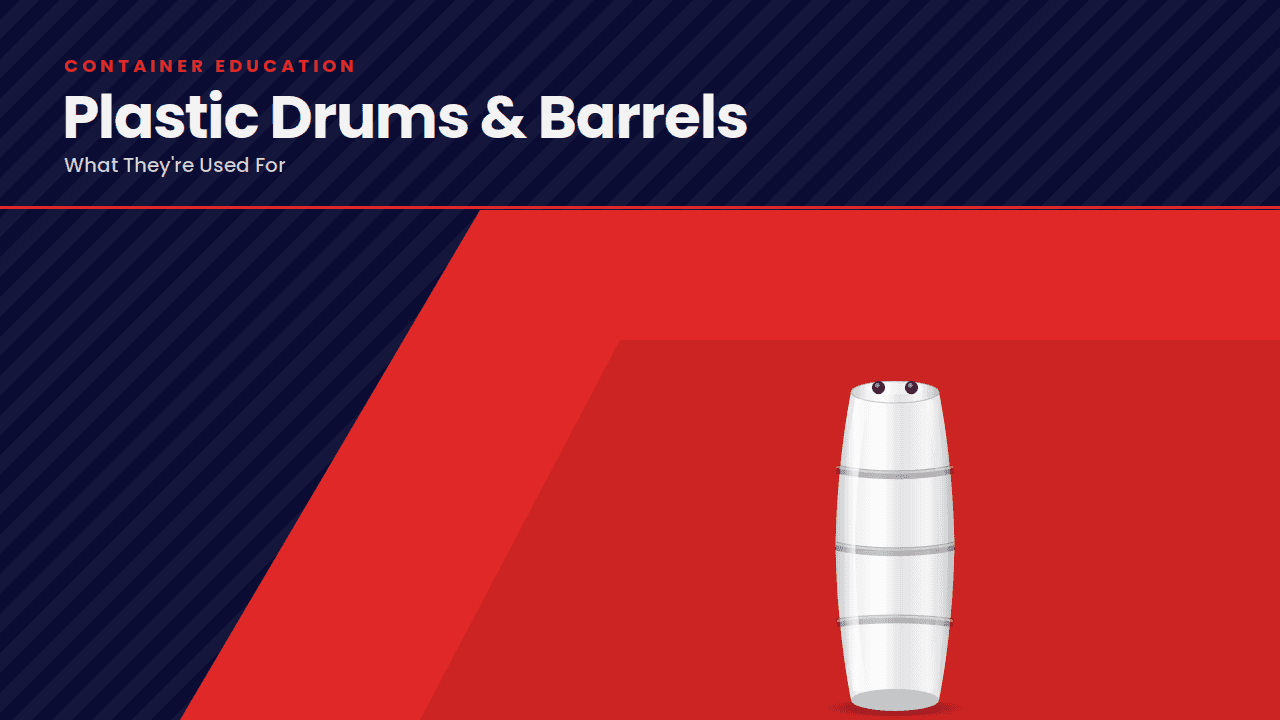
Plastic Drums & Barrels: What They're Used For

Table of Contents
Plastic drums & barrels show up everywhere in industrial packaging, and the reason comes down to one property steel can’t match: resistance to corrosion from the product’s it’s holding.
In most cases, when someone asks about plastic drums and barrels, they’re really asking whether HDPE is the right call for their product, or whether steel would serve them better. They’re built from high-density polyethylene (HDPE), a material that resists corrosion from acids, caustics, and aggressive chemical formulations that would eat through metal over time. That corrosion resistance is the core reason this category dominates certain applications, chemicals, agricultural products, and specialty cleaners while steel remains the standard elsewhere.
This guide explains what plastic drums and barrels are used for, covers the container types available, and helps buyers identify when plastic is the right material and when it isn’t. if you want broader context on choosing between drum types generally, see our guide to How Do You Choose the Right Type of Drum or Barrel for Your Needs?
Plastic vs. Steel: Why Material Is the First Decision
Before capacity, head type, or closure style even enter the conversation, the material decision must be made first, because it determines whether the container survives contact with the product at all.
Steel is the traditional standard for industrial drums, and it performs well under demanding physical conditions – heavy handling, stacking, temperature extremes. But steel has a real limitation: it corrodes. Acids, caustic solutions, and many industrial chemicals will degrade steel over time, weakening the container and risking failure long before the product inside is used up.
Plastic drums & barrels solve that problem. HDPE doesn’t rust, doesn’t corrode from most chemical exposure, and holds up well against the aggressive formulations that would compromise a steel container. That’s why the material decision comes first: pick the wrong one, head type, capacity, and closure configuration stops mattering the moment the container fails.
Where Are Plastic Drums & Barrels Used?
Plastic drums & barrels are used anywhere a product’s chemistry would react poorly with metal, or where cost and weight matter more than the physical toughness steel provides. Common applications include:
- Acids, caustics, and reactive industrial chemicals
- Agricultural chemicals, fertilizers, and pesticides
- Water treatment chemicals and pool products
- Food-grade liquids and ingredients
- Cleaning chemicals and industrial detergents
- Cosmetic and personal care formulations
These containers protect product integrity across storage, shipping, and handling, without the corrosion risk steel introduces. In regulated categories – hazardous chemicals, certain food applications, this category also has to meet UN certification requirements just like their steel counterparts. That’s the practical reason material matters as much as it does: the wrong choice doesn’t just cost more; it can mean a container that fails before the product ships.
What Types of Plastic Drums Are Available?
Not all plastic drums serve the same purpose. Understanding the options is part of getting the material decision right, because within the plastic category, head style, lining, and certification each affect performance and application fit.
Open Head HDPE Drums – Removable lid for easy filling, access, and cleaning. Suited to thicker, higher-viscosity products, solids, and anything that needs to be scooped or manually loaded.
Tight Head HDPE Drums – Fixed top with bung openings for fill and dispense. Better leak resistance than open head, and the standard choice for liquid chemicals, cleaning products, and agricultural formulations.
UN-Rated HDPE Drums – Certified for shipping regulated and hazardous materials. Passed specific performance testing for the hazard class they’re approved to carry, with documentation to match.
Lined HDPE Drums – An internal barrier layer for products that would otherwise react with or permeate standard HDPE, extending shelf life and protecting product purity.
Natural (Translucent) HDPE Drums – Allow visual inspection of fill level and product condition without opening the container, useful for quality control in food and chemical applications.
UV Stabilized HDPE Drums – Additives that resist degradation from prolonged sunlight exposure, intended for products stored or shipped outdoors for extended periods.
What Actually Determines the Right Plastic Drum
Once the case for choosing plastic is established, the decision still comes down to handful of factors working together: capacity, wall thickness, closure type, and regulatory rating.
Capacity follows the same standard sizes used across the drum category – 5,15, 30, 55 and 85 gallons because handling equipment, pallets, and warehouse racking are built around them.
Wall thickness affects how the drum handles stacking, temperature swings, and rough handling. A thin – wall drum may be fine for a controlled indoor environment, while outdoor storage or long-distance shipping usually calls for heavier-gauge plastic.
Closure type determines how the product goes in and comes out, following the same open head vs. tight head logic that applies to steel drums.
Regulatory rating applies the moment the product is classified as hazardous for shipping. A UN rating for a plastic drum certifies it has passed the same category of performance testing required of steel, and skipping it is a compliance failure regardless of material.
Where Buyers Get This Wrong
Most mistakes with this category come from treating “plastic” as a single, interchangeable material rather than one with its own set of tradeoffs to manage.
A common one is assuming HDPE is compatible with a formulation without confirming it. Plastic resists many chemicals steel can’t handle, but it isn’t universally compatible either, certain solvents and aggressive compounds will permeate or degrade standard HDPE over time. Another is skipping UV stabilization for products stored outdoors, leading to premature brittleness and cracking. A third is defaulting to unlined HDPE for a product that needs a barrier layer, risking contamination or reduced shelf life.
The other variable buyers often overlook is confusing “food-grade” with “food-safe by default.” Not every HDPE drum is manufactured and certified to food-grade standards, even though the resin looks the same. The right answer depends on documented compliance, not a visual assumption about the material.
How ILLING Approaches Plastic Drum & Barrel Sourcing
At ILLING, plastic drum selection starts with product chemistry, not a default assumption that HDPE is automatically the safer choice. Before recommending a plastic drum over steel, the conversation covers what’s going inside, how it will be stored and shipped, and whether UN certification or food-grade documentation applies.
ILLING stocks open and tight head HDPE drums, lined and unlined options, and UN-rated configurations across standard industrial sizes, backed by a four-warehouse network that keeps lead times short. Where a product requires UV-stabilized or food-grade plastic, that specification is confirmed before the order ships, not treated as an afterthought.
The Bottom Line
Plastic drums & barrels aren’t simply the “safer” or “cheaper” alternative steel, they’re the right choice when a product’s chemistry, storage conditions, or regulatory category call for corrosion resistance that steel can’t provide. Capacity, wall thickness, closure type, and rating still must align, the same as any other container decision. Getting the material choice right upfront is what keeps this category from becoming the reason a product fails before it reaches its destination.
FAQs
What Are Plastic Drums and Barrels Typically Used For?
They’re most often used for products that would corrode a steel container, acids, caustics, agricultural chemicals, cleaning products, and certain food-grade liquids.
Is Plastic Better Than Steel for Chemical Storage?
It depends on the chemical. HDPE resists corrosion from many acids and caustic substances that would degrade steel, but it isn’t universally compatible with every chemical either. The right material depends on the specific formulation.
Do Plastic Drums Need a UN Rating?
Yes, if the product inside is classified as hazardous for shipping. An UN-rated plastic drum has passed the same category of performance testing required of an UN-rated steel drum.
Can Plastic Drums Be Used for Food Products?
Yes, but only if manufactured and certified to food-grade standards. Not every HDPE drum meets that standard by default, even though the material looks the same.
Are Plastic Drums Durable Enough for Outdoor Storage?
With UV stabilization, yes. Standard HDPE can become brittle and crack under prolonged sun exposure, so outdoor or long-term storage applications typically call for a UV-stabilized formulation.