262-250-7566
 Request a quote
News & insights.
What we’re learning, what we’re seeing, and the occasional story from the floor: packaging trends, supply-chain notes, and compliance updates we wish we’d known sooner.
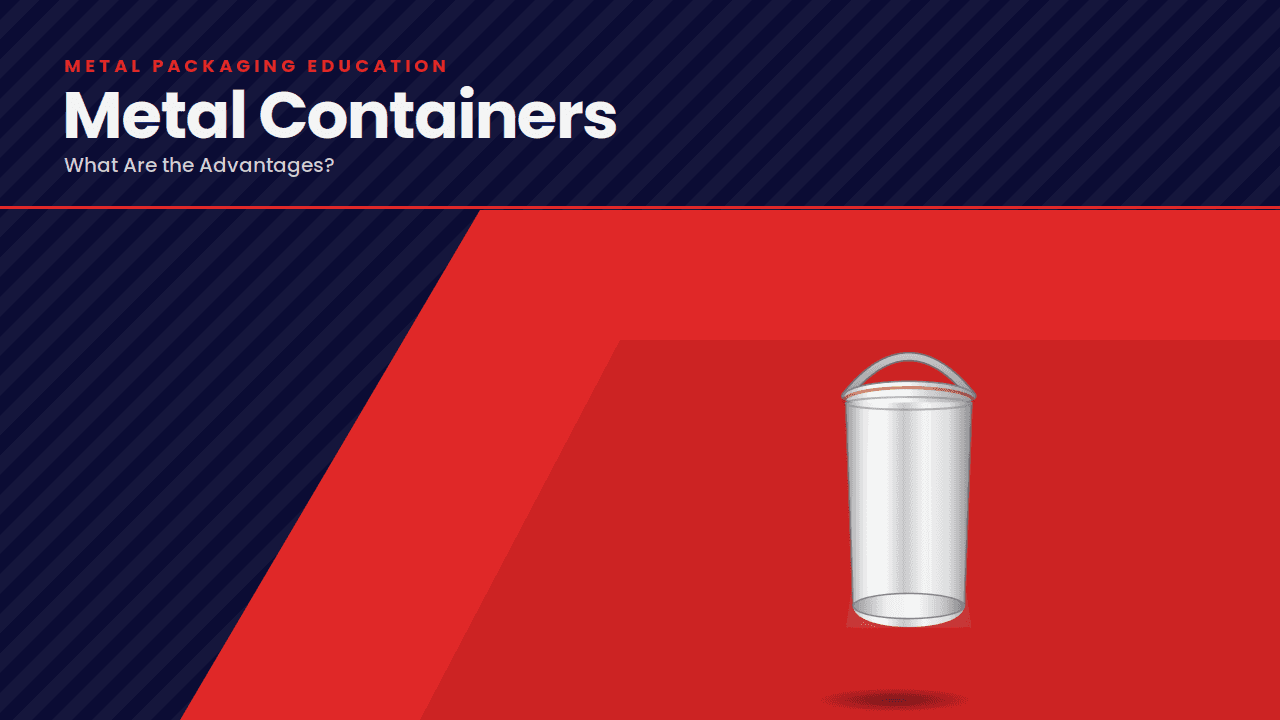
What are the Advantages of Metal Containers?

Table of Contents
Metal containers have outlasted nearly every packaging trend that’s come along to replace them, and that staying powder isn’t nostalgia it's performance. When a product needs real strength, a long service life, and protection that plastic alternatives can’t always match, the advantages of metal containers become obviously fast.
In most cases, the advantages of metal containers come down to four things: structural strength, chemical, and temperature resistance, security, and long-term reusability. These properties apply whether the container in question is a steel drum, a tinplate can, or a steel pail, which is why metal shows up across such a wide range of industrial and commercial applications despite lighter, cheaper materials being available.
This guide explains the core advantages of metal containers, covers the container types available, and helps buyers identify when metal is the right choice for their product. If you want a closer look at one specific metal format, see our guide to Packaging Materials Guide.
Why Metal Outperforms Other Packaging Materials
The advantages of metal containers aren’t a single property, they’re a combination that’s hard for plastic, fiber, or composite alternatives to match all at once.
Structural strength is the most obvious one. Metal containers hold their shape under heavy stacking, rough handling, and the kind of physical stress that would deform or crack a plastic equivalent.
Chemical and temperature resistance is just as important. Steel and tinplate hold up against a wide range of solvents and formulations, and metal containers tolerate temperature extremes – both hot and cold, far better than most plastics, which can soften, wrap, or become brittle outside a narrower range.
Security matters for regulated and high-value products. Metal containers are harder to breach, puncture, or tamper with than thinner plastic packaging, which is part of why hazardous materials, chemicals, and certain regulated goods default to metal.
Reusability rounds out the case. Steel drums can be cleaned, inspected, and reconditioned for additional service life, something most plastic containers simply aren’t built to support at the same scale.
Where Are Metal Containers Used?
The advantages of metal containers translate into real use across a wide range of industries, wherever strength, protection, or longevity matter more than minimizing weight or cost. Common applications include:
- Industrial chemicals and solvents
- Paints, coatings, and adhesives
- Automotive fluids and lubricants
- Aerosol and pressurized products
- Specialty and premium food packaging
- Hazardous and regulated materials shipping
The right metal container protects product integrity across storage, shipping, and repeated handling, while giving regulated products the certification and durability they need to move safely through the supply chain. In categories where a failure has real consequences, hazardous chemicals, high-value goods, the advantages of metal containers aren’t nice to have, they’re the baseline requirement.
What Types of Metal Containers Are Available?
Not all serve the same purpose. Understanding the options is part of getting the packaging decision right, because within the metal category, format, gauge, and configuration each affect performance and application fit.
Steel Drums – Open and tight head configurations in standard industrial sizes, built for bulk chemicals, industrial liquids, and hazardous materials requiring UN certification.
Steel Pails – Smaller-volume containers for greases, coatings, and industrial products where a full drum isn’t necessary, but metal’s strength still matters.
Tinplate Cans – Lightweight steel cans used across paints, solvents, and specialty foods, offering strong barrier protection at a lower weight than heavier steel formats.
Aerosol Cans – Pressure – rated steel or aluminum construction engineered to safely contain propellant – based formulations under internal pressure.
Steel IBC Cages – Structural steel frames around a plastic bladder, combining steel’s strength with a lighter – weight liquid – holding component for bulk transport.
Reconditioned Steel Containers – Previously used drums or pails cleaned, inspected, and recertified for continued service, extending the usable life of the original container.
What Actually Determines the Right Metal Container
Once the advantages are established in the right direction, the decision comes down to a handful of factors: gauge, lining, format, and regulatory rating.
Gauge refers to the thickness of the metal itself, which affects both durability and cost. Heavier gauge steel handles more demanding physical conditions, while lighter gauge options reduce weight and cost for less demanding applications.
Lining matters the moment a product could react with bare metal. Acidic products, solvents, and reactive chemicals typically need an internal coating to prevent corrosion or contamination over time.
Format – drum, pail, can or IBC is driven by volume, handling equipment, and how the product moves through a facility, not just by what a buyer is used to ordering.
Regulatory rating applies the moment a product is classified as hazardous for shipping. A UN-rated metal container has passed specific performance testing for its approved hazard class and skipping that certification is a compliance failure with real liability attached.
Where Buyers Get This Wrong
Most mistakes with metal containers come from assuming all metal formats offer the same advantages, when gauge, lining, and configuration vary significantly across the category.
A common one is selecting a lighter-gauge container for an application that needs heavier-duty construction, leading to premature failure under stacking or rough handling. Another is skipping a lining assessment for a product that reacts with bare metal, resulting in corrosion or contamination that undermines the very advantages metal was chosen for. A third is defaulting to new steel when a reconditioned container would perform identically for a non-critical application, adding unnecessary cost.
The other variable buyers frequently overlook weight. Metal containers offer real strength advantages, but that comes with a weight tradeoff that affects shipping costs and handling requirements, a factor worth weighing against the performance benefits before defaulting to metal by habit.
How ILLING Approaches Metal Container Sourcing
At ILLING, metal container selection starts with what the product requires, not an assumption that metal is automatically the stronger or safer choice regardless of application. Before recommending a drum, pail, can, or IBC, the conversation covers the product’s chemistry, how it will be handled, and whether UN certification applies.
ILLING stocks steel drums, pails, and tinplate cans across standard industrial sizes, in new and reconditioned configurations, backed by a four-warehouse network that keeps lead time short. Where a product requires a specific lining or regulatory certification, that’s confirmed before the order ships, not treated as an afterthought.
The Bottom Line
The advantages of metal containers, strength, chemical resistance, security, and reusability – make metal the right choice whenever a product needs to survive rough handling, resist reactive chemistry, or meet a regulatory bar that lighter materials can’t clear. Gauge, lining, format, and rating still have to align, the same as with any other container decision. Getting that right upfront is what turns metal’s real advantages into results, instead of unnecessary weight and cost on a product that didn’t need them.
FAQs
What are the Main Advantages of Metal Containers?
The core advantages are structural strength, resistance to chemicals and temperature extremes, security against tampering or breach, and reusability through cleaning and reconditioning.
Are Metal Containers Better Than Plastic Ones?
It depends on the product. Metal offers superior strength and chemical resistance, but plastic is often lighter and cheaper. The right choice depends on what the product needs to survive and how it will be handled.
Do Metal Containers Need a Lining?
Only if the product could react with bare metal. Acidic products, solvents, and reactive chemicals typically need an internal coating to prevent corrosion or contamination.
Can Metal Containers Be Reused?
Yes, particularly steel drums and pails, which can be cleaned, inspected, and recertified for continued service, something most plastic containers aren’t built to support at the same scale.
What Industries Rely Most on Metal Containers?
Industrial chemicals, paints and coatings, automotive fluids, aerosol products, and hazardous materials shipping are among the heaviest users of metal container packaging.