262-250-7566
 Request a quote
News & insights.
What we’re learning, what we’re seeing, and the occasional story from the floor: packaging trends, supply-chain notes, and compliance updates we wish we’d known sooner.
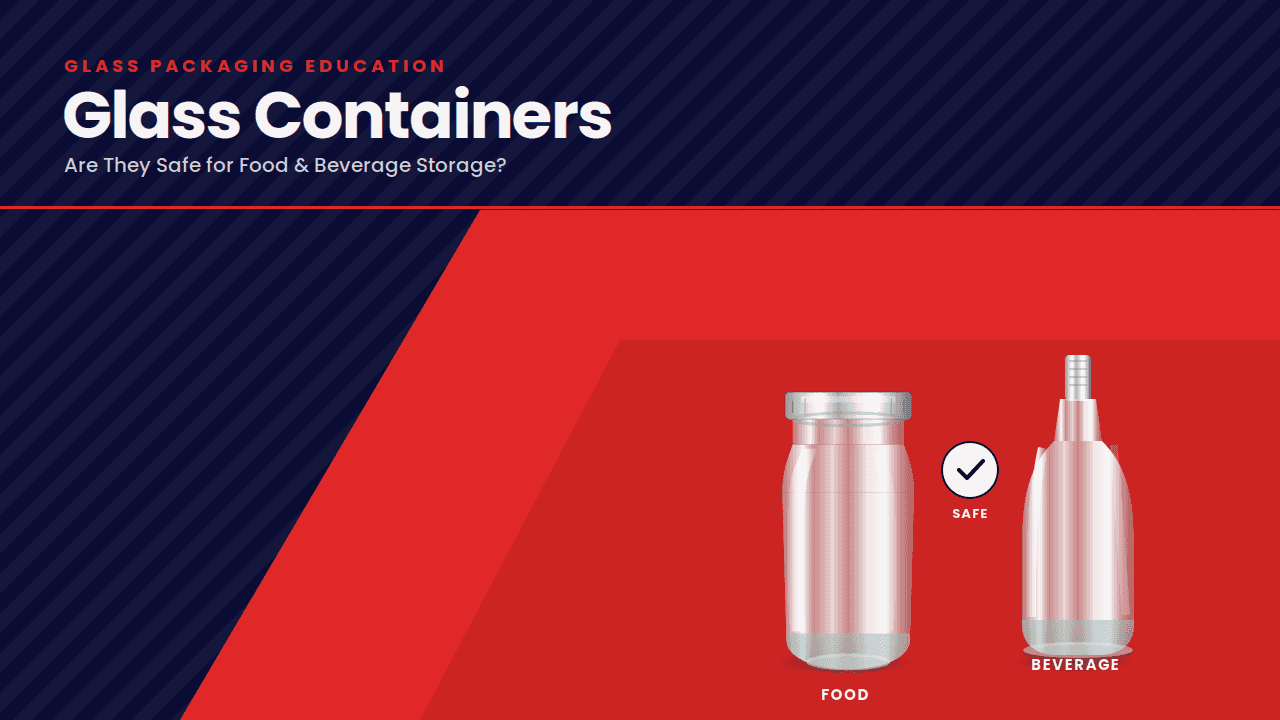
Are Glass Containers Safe for Food and Beverage Storage?

Table of Contents
Glass containers are one of the safest materials available for storing food and beverages, and it has been used for that purpose for thousands of years.
Glass has been used to store food and drink for thousands of years, long before "food safe" was a regulatory term. That track record is not an accident. Glass has a set of physical and chemical properties that make it uniquely well suited to holding what we eat and drink and understanding those properties can help you decide when glass is the right call for your own packaging.
Why Glass Is Considered Food Safe
It does not react with what it holds. Glass is chemically inert, meaning it will not leach interact with some plastics over time. This is part of why glass is the standard choice for products like tomato sauce, citrus juice, and fermented foods, where reactively with packaging is a real concern.
It does not absorb odors or stains. Because glass has a non-porous surface, it can be washed and reused without retaining smells or discoloration from previous contents, which also makes it a strong option for products that will be repackaged or refilled.
It holds up to heat and cold. Glass containers can typically go from the freezer to the oven or microwave, within manufacturer guidelines, which makes them practical for both storage and preparation, and reduces the number of separate containers a household or kitchen needs to keep in hand.
It is widely recognized as safe. Glass is generally recognized as safe for food contact by regulatory bodies, and it contains no BPA, phthalates, or other additives that raise health concerns in some plastics, which is increasingly a selling point for health-conscious consumers.
What to Keep in Mind
Breakage risk. Glass is more fragile than plastic or metal, which matters for shipping, high-traffic environments, or anywhere containers are likely to be dropped. Protective packaging and careful handling procedures can offset much of this risk, but it is rarely eliminated entirely.
Weight. Glass is heavier than most plastic alternatives, which can affect shipping costs and handling, especially on a scale, and is worth factoring into freight calculations early in the packaging decision.
Cost. Glass containers are typically more expensive to produce and ship than comparable plastic options, though many businesses find the tradeoff worthwhile for the quality perception and safety profile glass provides.
Choosing the Right Glass Container
Not all glasses are the same. Borosilicate glass offers better resistance to thermal shock, making it a common choice for containers that will see temperature changes. Soda-lime glass, the more common and less expensive option, works well for most standard food and beverage storage. If your product is exposed to direct sunlight for long periods, amber or cobalt glass can help protect light-sensitive contents.
Common Food-Grade Glass Packaging Types
Mason and canning jars are a familiar choice for preserving, fermenting, and shelf stable storage, typically paired with a lug or continuous thread lid for an airtight seal.
Straight-sided jars offer a clean, uniform look that works well for retail products where label visibility and shelf presentation matter.
Glass bottles remain the standard for beverages, oils, and sauces that need to be poured, and come in a wide range of neck finishes to match different closure types.
The Bottom Line
For food and beverage storage, glass remains one of the most trusted materials available. It is inert, durable, and free of the chemical concerns that sometimes come with plastic. The main tradeoffs are weight, cost, and breakage risk, all of which are manageable with the right container design and handling practices.
FAQs
Is Glass Really Safer Than Plastic for Food Storage?
Glass is chemically inert and won't leach chemicals into food, while some plastics can interact with acidic or fatty contents over time. For most food and beverage storage, glass is considered the safer option.
Can You Put Glass Containers in the Microwave or Freezer?
Most glass containers can go from freezer to microwave or oven, within the manufacturer's guidelines, though sudden temperature swings can cause cracking.
Does Glass Contain BPA or Other Harmful Chemicals?
No. Glass contains no BPA, phthalates, or similar additives, which is one of the main reasons health-conscious consumers and food brands choose it over certain plastics.
Is Glass Packaging More Expensive Than Plastic?
Generally yes, both to produce and to ship due to its weight, but many businesses find the tradeoff worthwhile for the quality perception, safety profile, and recyclability glass offers.
How Do I Know If a Glass Container Is Food-Grade?
Look for containers manufactured and certified specifically for food or beverage contact, with documentation confirming they meet relevant safety standards, rather than repurposing glass that wasn't made for that purpose.