262-250-7566
 Request a quote
News & insights.
What we’re learning, what we’re seeing, and the occasional story from the floor: packaging trends, supply-chain notes, and compliance updates we wish we’d known sooner.
Ocean-Bound Plastic

Table of Contents
A Second Life for Ocean-Bound Plastic.
Turning the plastic most likely to end up in the sea into high-quality packaging, before it ever reaches the water.
What Is Ocean-Bound Plastic?
Ocean Bound Plastic: A Second Life for Ocean-Bound Plastic is the story of one of the most visible environmental problems of our time, plastic pollution in our oceans, and how it’s stopped before it starts. Most ocean plastic doesn’t begin in the water; it starts on land, in places where waste management systems are overwhelmed or missing entirely. Coastal regions in the fastest-growing economies often generate plastic waster faster than local infrastructure can collect, sort, or process it, and the gap between the two is where the problem begins.
Ocean-Bound Plastic (OBP) is the plastic most likely to wind up in the sea: usually mismanaged waste that spills out of coastal regions before it ever reaches a proper recycling stream. It’s typically found within roughly 50 kilometers of a coastline or major waterway, in areas without formal waste management, which makes it disproportionately likely to be swept into rivers and, eventually, the ocean.
Left unchecked, it breaks down into microplastics, harms marine life, and pollutes coastal ecosystems for generations. Once in the water, plastic doesn’t biodegrade the way organic material does, it fragments into smaller pieces that persist in the environment, enter the food chain, and are effectively impossible to fully remove once dispersed.
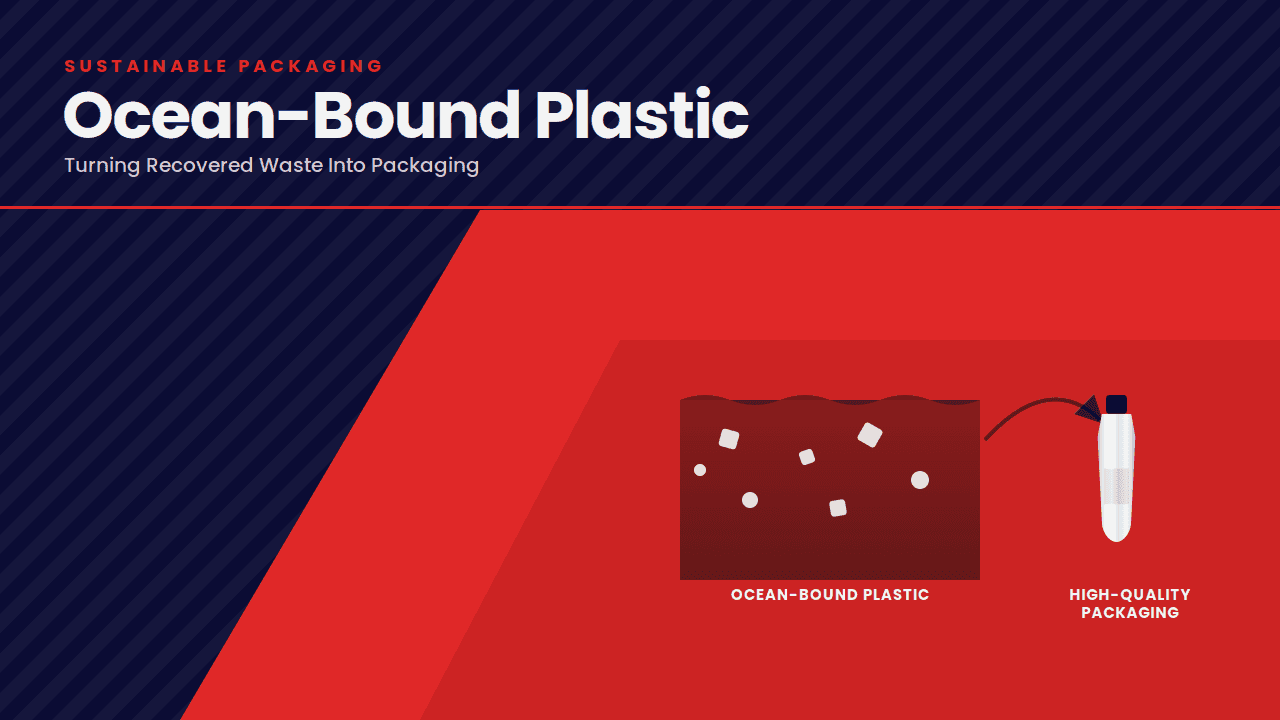
ILLING Packaging captures it and turns it into packaging using Post-Consumer Resins (PCR), intercepting the problem before it happens instead of cleaning it up after the fact. By working upstream, closer to the source of the problem, we’re able to prevent plastic from ever reaching open water in the first place, rather than attempting the far harder task of removing it afterward.
From Waste Stream to Packaging
By packing the highest possible recycled content into each tube and bottle, we use very little virgin material, save resources, and divert plastic that was headed for landfill, or worse, the ocean. That gives consumed containers a second, or even third life, the same polymer can move through multiple product cycles instead of being used once and discarded.
The process starts with collection: OBP is gathered from at-risk coastal areas, sorted, cleaned, and reprocessed into Post-Consumer Resin suitable for packaging manufacture. From there, it’s engineered into tubes and bottles that meet the same performance standards brands expect from virgin plastic, clarity, strength, and compatibility with existing filling lines without the same environmental cost.
It’s not just about doing less harm. It’s about putting discarded material back to work, turning a liability into a resource. Every container made this way represents plastic that didn’t become marine debris, and a supply chain that treats waste rather than an afterthought.
What That Means for Brands
The environmental case for Ocean-Bound Plastic only holds up if the sourcing behind it does too, which is why every part of the supply chain is built to verify, not just claimed. Sustainability claims are only as credible as the data behind them, and brand owners are increasingly expected to back up their packaging story with evidence, not just a label.
That’s why chain-of-custody documentation follows the material from the point of collection all the way through to the finished container, so when a brand tells its customers a package is made from Ocean-Bound Plastic, that claim is something they can stand behind.
- Certified Ocean-Bound Plastic supply chain
- High recycled content, minimal virgin material
- Verified chain of custody for brand owners
Bottom Line
Ocean-Bound Plastic packaging turns a global waste problem into a resource stream, capturing plastic before it reaches the ocean, giving it new life as high-quality packaging, and giving brands a verified, traceable way to reduce their reliance on virgin material.
See our full sustainability approach: Sustainable Packaging: Recycled, Renewable & Refillable | ILLING Packaging
FAQs
What is Ocean-Bound Plastic?
Ocean-Bound Plastic is plastic waste that's at high risk of entering the ocean, typically mismanaged waste in coastal areas without adequate collection or recycling infrastructure, usually found within about 50 km of a coastline or major waterway.
How Is Ocean-Bound Plastic Different from Ocean Plastic or Regular Recycled Plastic?
Ocean plastic has already reached the sea; Ocean-Bound Plastic is intercepted before that happens. Unlike general recycled plastic, which can come from any waste stream, OBP is specifically sourced from at-risk coastal regions as a targeted way to prevent marine pollution.
What Does ILLING Packaging Make from Ocean-Bound Plastic?
ILLING Packaging uses Post-Consumer Resins (PCR) sourced from Ocean-Bound Plastic to manufacture high-quality tubes and bottles, packing in the highest possible recycled content while minimizing virgin material.
Is Ocean-Bound Plastic Packaging as Durable as Packaging Made from Virgin Plastic?
Yes. ILLING's OBP-based packaging is engineered to meet the same performance standards as virgin plastic, including clarity, strength, and compatibility with standard filling lines, without the same environmental impact.
How Does ILLING Verify It's Ocean-Bound Plastic Supply Chain?
Every stage of the supply chain, from collection to finished container, is documented through a verified chain of custody, so brand owners can confirm, not just claim, that their packaging is genuinely sourced from Ocean-Bound Plastic.