262-250-7566
 Request a quote
News & insights.
What we’re learning, what we’re seeing, and the occasional story from the floor: packaging trends, supply-chain notes, and compliance updates we wish we’d known sooner.
Green Polyethylene

Table of Contents
Renewable Recyclable, Grown from Sugarcane.
Green Polyethylene, a plastic that starts in a field, not an oil well, and still performs like the HDPE and LDPE brands already rely on.
A Renewable Source for a Familiar Material
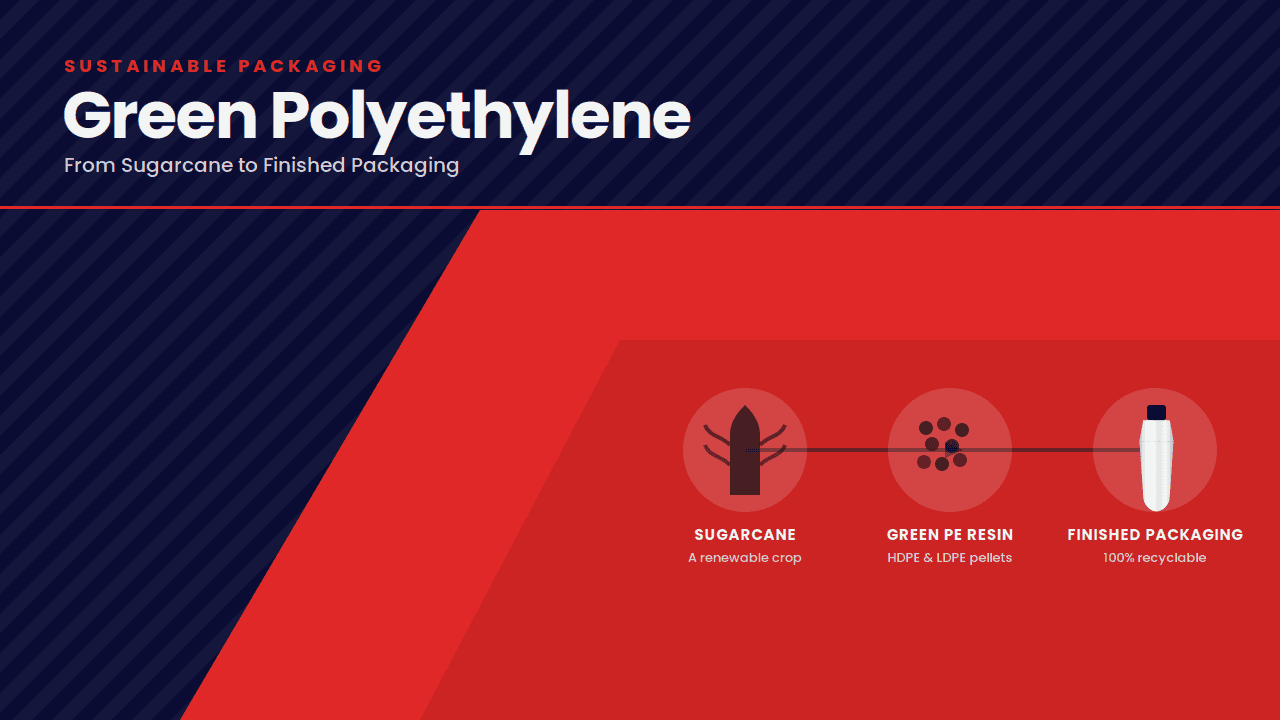
Green Polyethylene: Renewable, Recyclable, Grown from Sugarcane starts with a simple swap, the same polyethylene brands already run through their lines, just sourced from a field instead of a well. Sugarcane is a versatile, renewable crop, and a clean source of raw material for plastics. Unlike conventional polyethylene, which is refined from fossil fuels, sugarcane-based resin comes from a crop that’s replanted and harvested on a regular cycle, season after season.
Our portfolio features several HDPE and LDPE sugarcane resins suited to extrusion blow molding, injection molding, and film extrusion, the same processes brands already use, just starting from a different raw material. That means switching to Green Polyethylene doesn’t require new equipment, new tooling, or a different manufacturing process. It’s a change at the source of the material, not the process that shapes it.
Because the agricultural cycle for sugarcane is well-established at industrial scale, supply isn’t a constraint the way it can be for some emerging bio-based materials. Green Polyethylene is already produced at commercial volumes, which means brands can adopt it without the sourcing uncertainty that comes with newer alternatives.
Performance Without the Trade-Off
Tubes and bottles made from Green Polyethylene combine high performance and processability with a real commitment to the environment, reducing greenhouse gas emissions across the production chain while staying 100% recyclable. Brands don’t have to choose between how a package performs and where its material comes from.
Because Green Polyethylene shares the same molecular structure as conventional HDPE and LDPE, it behaves identically on the production line and in the recycling stream, there’s no compromise on clarity, strength, or barrier performance, and no separate disposal instructions for the end customer.
- Extrusion Blow Molding
- Injection Molding
- Film Extrusion
What That Means for Brands
Green Polyethylene gives brands a way to lower their carbon footprint at the material level, not just at the recycling bin, with resins already validated for the processes they run today. Rather than asking a brand to redesign its packaging or retain its supply chain, the shift happens further upstream, at the resin itself.
That’s what makes it a practical starting point for brands beginning a sustainability transition: the environmental benefit doesn’t depend on the customer recycling correctly, and it doesn’t require a new production line to realize.
- HDPE & LDPE Green PE sugarcane resins
- 100% recyclable, made from a renewable crop
- Lower greenhouse gas footprint, end to end
Bottom Line
This proves that renewable and high-performance aren't mutually exclusive. By sourcing HDPE and LDPE resins from sugarcane instead of fossil fuels, ILLING Packaging gives brands a way to cut greenhouse-gas emissions across the production chain while keeping every part of the package 100% recyclable. See our full sustainability approach Sustainable Packaging: Recycled, Renewable & Refillable | ILLING Packaging.
FAQs
What Is Green Polyethylene?
Green Polyethylene is HDPE or LDPE resin made from sugarcane-derived ethanol instead of fossil fuels, chemically identical to conventional polyethylene, just sourced from a renewable crop.
Does Green Polyethylene Perform Differently Than Regular Plastic?
No. Because it shares the same molecular structure as conventional HDPE and LDPE, it behaves identically in production and in use, no compromise on clarity, strength, or barrier performance.
Is Green Polyethylene Recyclable?
Yes, 100%. It integrates into existing recycling streams the same way conventional polyethylene does, with no special handling or separate disposal instructions required.
Do Brands Need New Equipment or Processes to Switch to Green Polyethylene?
No. It runs through the same extrusion blow molding, injection molding, and film extrusion processes brands already use, the change happens at the raw material level, not the manufacturing line.
How Does Green Polyethylene Reduce Environmental Impact if It's Still Plastic?
Because sugarcane is a renewable, replantable crop rather than a fossil fuel, producing Green Polyethylene generates a lower greenhouse-gas footprint across the production chain compared to conventional, oil-derived polyethylene.