262-250-7566
 Request a quote
News & insights.
What we’re learning, what we’re seeing, and the occasional story from the floor: packaging trends, supply-chain notes, and compliance updates we wish we’d known sooner.
In-House Decoration: The Quality Advantage

Table of Contents
Most industrial brands don't think much about how their packaging gets decorated until something goes wrong: a label that peels, a color that doesn't match the last run, a shipment delayed because the decorator was waiting on containers from a different supplier. By then, the structural problem is already baked in. The decoration was treated as a separate step, handled by a separate vendor, with a handoff in between that nobody fully owns.
In-house decoration, where the same company that sources your containers also decorates them, removes that handoff and the quality risk that comes with it. This guide explains why that integration produces a real and measurable quality advantage for industrial brands: fewer failure points, tighter quality control, faster turnaround, and a single point of accountability. If you want the full overview of decoration first, start with our Packaging Decoration 101 guide, or see our guide to Packaging Decoration Methods for the methods themselves.
The Hidden Cost of Splitting Sourcing and Decoration
The conventional way industrial packaging gets decorated involves at least two companies. A buyer sources containers from one supplier, receives them, then ships them to a separate decorator for printing or labeling, and finally receives the decorated containers back before they enter production. On paper it works. In practice, every handoff in that chain is a place where quality, time, and accountability can fall through the cracks.
Consider what the split-vendor model actually creates: two separate lead times that stack on top of each other, two invoices, two quality standards that may not align, and a gap in the middle where neither vendor is fully responsible for the finished result. When a color doesn't match, the container supplier blames the substrate and the decorator blames the artwork. When a shipment is late, each points to the other. The buyer is left coordinating between two companies that have no stake in each other's performance.
These aren't rare edge cases. They're the structural, predictable cost of treating decoration as a separate transaction from sourcing. And because the problems usually appear downstream, after the containers are decorated and in production, they're expensive to fix by the time they surface.
What In-House Decoration Actually Changes
This integrated approach collapses that two-vendor chain into one. The same team that sources your container applies the decoration, which changes the dynamics in four concrete ways.
| Factor | Split-Vendor Model | In-House Decoration |
|---|---|---|
| Quality control | Split across two companies | Controlled in one place |
| Lead time | Two lead times stacked | One combined lead time |
| Accountability | Shared and often disputed | Single point of ownership |
| Change handling | Coordinated across vendors | One conversation |
Tighter Quality Control
When sourcing and decoration happen under one roof, quality is controlled at a single point rather than negotiated between two. The team applying the decoration knows the container, because they sourced it. They're working with the actual substrate, not a description of it. Color matching, adhesion, alignment, and finish are all managed by people who control both halves of the equation. The result is more consistent quality, run after run, because nothing is lost in translation between two organizations.
Faster Turnaround
In the split-vendor model, your total lead time is the container lead time plus the inter-facility shipping plus the decoration lead time plus another shipping leg. In-house decoration eliminates the transit between sourcing and decoration entirely and combines the two processes into one timeline. For a brand that needs to move quickly, whether for a rush order, a seasonal push, or a reaction to demand, the compressed timeline is a direct operational advantage.
A Single Point of Accountability
Perhaps the most underrated benefit of in-house decoration is that when something needs attention, there's one phone call to make, not two. A regulatory label update, a graphic revision, an urgent reorder, a quality question: all of it goes to one team that owns the whole process. There's no finger-pointing between vendors, because there's only one vendor. That single point of accountability is worth more than it looks like on paper, because it turns a coordination problem into a simple conversation.
Cleaner Change Handling
Industrial brands change packaging more often than they expect to: a reformulation, a corrected claim, a regulatory update, a brand refresh. In the split-vendor model, every change has to be coordinated across two companies, each with its own timeline and process. With in-house decoration, a change is handled by the team that controls both the container and the decoration, which makes the change faster, cleaner, and less prone to the errors that creep in when information passes between organizations.
Why This Matters More for Multi-SKU Brands
The quality advantage is real for any industrial brand, but it compounds for brands running multiple SKUs. A company with a dozen or more decorated products, across different formulations, sizes, and labels, is managing a far more complex decoration program than a single-product brand, and the split-vendor model multiplies the complexity at every SKU.
Large decorators often optimize for long, single-design runs and treat short runs and frequent changeovers as inefficient, pricing them accordingly or declining them outright. A brand with many SKUs and moderate volumes per SKU is exactly the customer that model serves poorly. An integrated operation built to run smaller batches efficiently, with changeovers as a normal part of the workflow rather than an exception, fits that brand far better.
There's also a flexibility dimension. Decoration approaches that lock a brand into large minimum runs, such as in-mold labeling, can make even a small artwork change expensive and slow, sometimes requiring weeks of lead time and the disposal of previously produced labels. A decoration operation that isn't locked into those constraints can accommodate changes quickly and at batch sizes that match actual need, which protects a multi-SKU brand from the sunk costs and delays that rigid decoration programs create.
How to Evaluate a Decoration Capability
If you're weighing whether in-house decoration is right for your brand, or evaluating a supplier who offers it, here are the questions worth asking:
- Do you source and decorate under one roof, or do you outsource the decoration? Confirm the integration is real, not a relationship with a third-party decorator.
- Which decoration methods do you run in-house? Silk screen, shrink sleeve, pressure-sensitive, pail labeling, and RFID each serve different needs. A broad in-house capability means they can recommend the right method rather than the only one they offer.
- Can you run smaller batches and multiple SKUs efficiently? This is the dividing line between a decorator built for your needs and one built for high-volume single runs.
- How quickly can you accommodate an artwork or label change? The answer reveals whether their process is flexible or locked into long lead times.
- Who owns quality across both the container and the decoration? The answer should be a clear single point of accountability.
A supplier with strong answers across these questions offers a genuinely different experience than the split-vendor alternative. For a complete framework on evaluating packaging suppliers overall, see our guide to How to Evaluate a Packaging Supplier.
Where ILLING Fits In
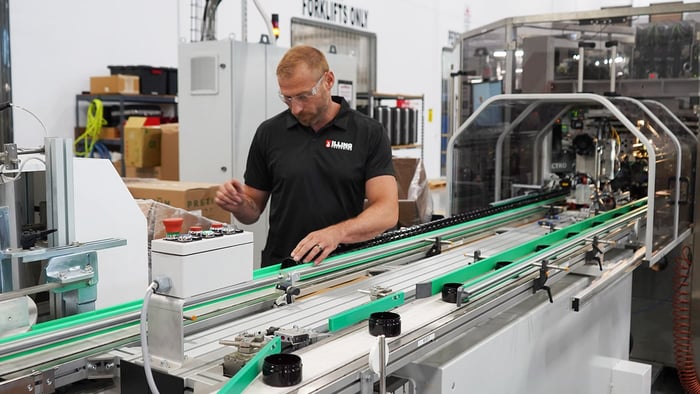
In-house decoration is one of the clearest cases where how the work is organized matters as much as how well it's done. ILLING built its decoration capability in-house for exactly the reasons this article describes: to eliminate the handoff, control quality at a single point, and give industrial brands one accountable team for both the container and the decoration.
We run silk screen printing, shrink sleeve labeling, pressure-sensitive labeling, pail labeling, and RFID labeling in-house, alongside our sourcing operation. That means when you work with us, the team that sources your container is the team that decorates it. Quality is controlled in one place, lead times don't stack across vendors, and when something needs to change, it's one conversation. And because our decoration operation is built to run smaller batches and multiple SKUs efficiently, we fit the multi-SKU industrial brands that high-volume-only decorators tend to underserve.
If your current decoration program runs through a separate vendor and you've felt the friction of that handoff, or if you're a multi-SKU brand paying changeover penalties that don't reflect the actual work, we'd like to hear about it.
For related guidance, see our guide to Packaging Decoration Methods for choosing among silk screen, label, and shrink sleeve, and our Industrial Pail Buying Guide for the container side of the decision.
FAQs
What does in-house decoration mean?
In-house decoration means the company that sources your containers also applies the decoration, whether that's silk screen printing, shrink sleeve labeling, pressure-sensitive labeling, or another method, rather than outsourcing the decoration to a separate vendor. The distinction matters because it eliminates the handoff between a container supplier and a decorator. With this model, one team controls both the container and the decoration, which means quality is managed at a single point, lead times don't stack across two companies, and there's one point of accountability for the finished result.
Is in-house decoration better than outsourcing?
For most industrial brands, the in-house model offers meaningful advantages over the split-vendor approach: tighter quality control, faster turnaround, a single point of accountability, and cleaner handling of changes. The split-vendor model creates a handoff where lead times stack, quality standards may not align, and neither vendor is fully responsible for the finished product. The in-house model removes that handoff. The advantage is especially pronounced for brands running multiple SKUs, where the complexity of coordinating decoration across two vendors multiplies at every product.
Why does splitting sourcing and decoration cause problems?
Splitting them creates a handoff that no single vendor fully owns. The container comes from one supplier and goes to a separate decorator, which means two lead times that stack, two quality standards that may not align, and a gap in the middle where accountability is shared and often disputed. When a color doesn't match or a shipment is late, each vendor tends to point to the other, and the buyer is left coordinating between two companies with no stake in each other's performance. Because these problems usually surface downstream, after the containers are decorated, they're expensive to fix by the time they appear.
Does in-house decoration matter for small production runs?
It matters especially for smaller runs and multi-SKU brands. Large decorators frequently optimize for long, single-design runs and treat short runs and frequent changeovers as inefficient, either pricing them at a premium or declining them. A brand with many SKUs at moderate volumes is poorly served by that model. An integrated operation built to run smaller batches efficiently, with changeovers as a normal part of the workflow, fits that brand far better, and can typically accommodate artwork changes more quickly and at batch sizes that match actual need.
What decoration methods can be done in-house?
A full-capability in-house decoration operation can run several methods, including silk screen printing, shrink sleeve labeling, pressure-sensitive labeling, pail labeling, and RFID labeling. The breadth matters because different products and run sizes call for different methods, and a decorator who runs all of them in-house can recommend the right method for your situation rather than steering you toward the only one they offer. When evaluating a decoration capability, it's worth confirming which methods are genuinely run in-house versus outsourced to a third party.