262-250-7566
 Request a quote
News & insights.
What we’re learning, what we’re seeing, and the occasional story from the floor: packaging trends, supply-chain notes, and compliance updates we wish we’d known sooner.
Drum vs. Barrel: How to Choose the Right Container

Table of Contents
The drum vs. barrel question comes up constantly in industrial packaging, and the harder part isn’t the terminology, its knowing which container fits the product going inside it.
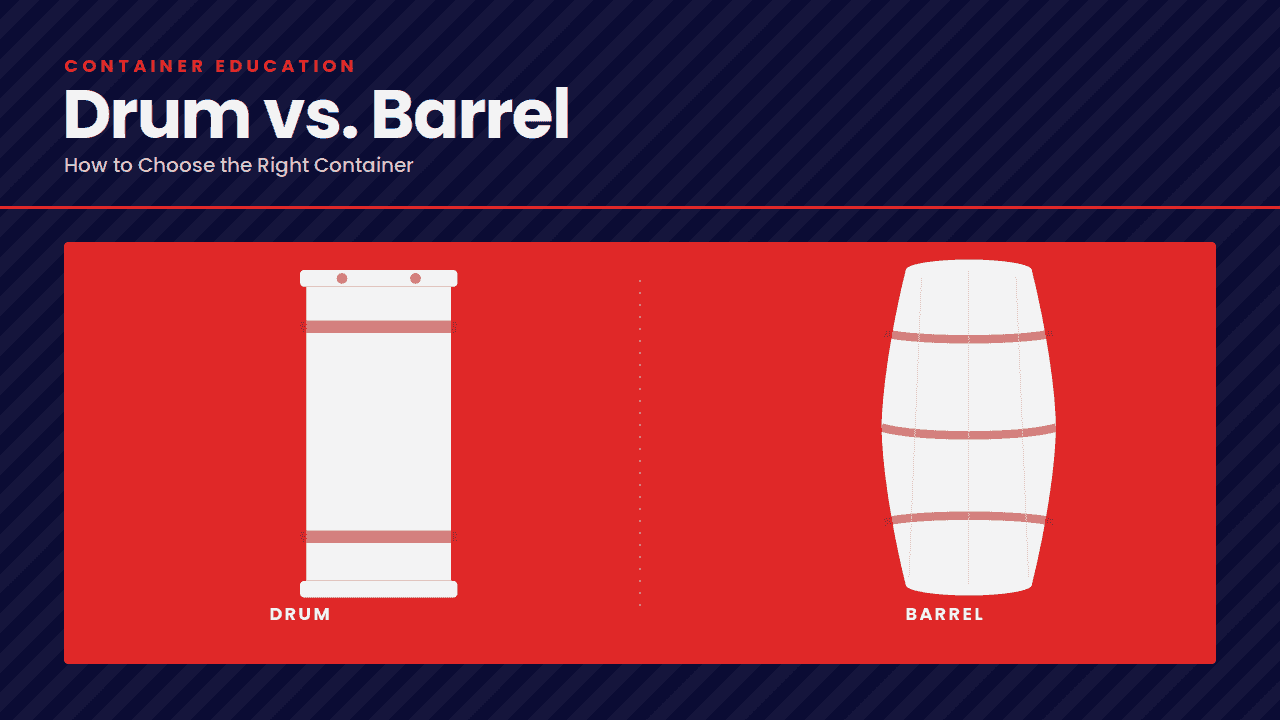
In most cases, a drum and a barrel refer to the same type of container, built for storing, shipping, and protecting bulk product. The difference in the drum vs. barrel debate is usually in terminology, not the container itself. In everyday and consumer contexts, “barrel” is more common, oil barrel, whiskey barrel, rain barrel. In industrial and commercial packaging, “drum” is the term used in specification documents, manufacturer catalogs, and regulatory standards. Whether you call it a drum or a barrel, the real decision comes down to the same four factors: material, head type, capacity, and regulatory rating.
This guide explains the drum vs. barrel distinction in plain language, covers the container types available, and helps buyers identify what matters when choosing the right one. If you want broader context on how to specify a container from scratch, see our guide to How to Evaluate a Packaging Supplier.
Drum vs. Barrel: What Each Term Actually Means
The terms get used loosely across industries, so it’s worth being precise about what each one means in practice, and why the drum vs. barrel distinction matters more in some contexts than others.
In everyday language, “barrel” is the common term, the one used outside the industry, often carrying a specific image (55-gallon steel, rounded, associated with oil or aging spirits). In industrial and commercial packaging, “drum” is the standard terminology used by manufacturers, distributors, and specification documents. A 55-gallon steel container in casual conversation is a barrel. The same container in a packaging catalog is a drum.
The container itself doesn’t change based on what you call it. What changes is the context, the specification language, and the expectations around performance, compliance, and handling that come with industrial use. When a chemical manufacturer specific an UN-rated drum, they’re working within a defined set of material, testing, and certification standards that a casual reference to “a barrel” doesn’t carry with it.
Where Are Drums and Barrels Used?
Drums and barrels are used across a wide range of industries because they offer a practical, dependable way to store and ship bulk liquids and solids. The drum vs. barrel terminology shifts depending on who’s talking, but the applications are consistent. Common uses include:
- Chemicals, solvents, and industrial fluids
- Food-grade ingredients and liquid food products
- Paints, coatings, and adhesives
- Lubricants, oils, and automotive fluids
- Agricultural and pest-control products
- Waste, recycling, and reclaimed materials
The right drum protects product quality while supporting safe storage, transportation, and day-to-day handling. In regulated categories, chemicals, hazardous materials, certain food applications, the container also must meet applicable testing and certification requirements, which a generic, uncertified barrel typically won’t satisfy. That’s the practical reason the drum vs. barrel distinction matters: it signals whether a container was manufactured and tested to an industrial standard or simply built to hold a shape.
What Types of Drums Are Available?
Not all drums serve the same purpose. Understanding the options is part of getting the container decision right, because within the drum category, the material, head style, and configuration reach affect how the container performs and what it’s suited for.
Steel Open Head Drums – Removable lid for easy filling, access, and cleaning. Common for viscous chemicals, industrial waste, and products that need to be scooped or manually loaded. UN-rated options available for regulated materials.
Steel Tight Head Drums – Fixed top with bung openings for fill and dispense. Better leak resistance than open head, and the standard choice for flammable liquids, solvents, and products that need a fully sealed container throughout the supply chain.
HDPE Open Head Drums – Plastic construction resists corrosion from acids and aggressive chemicals that would degrade steel. Removeable lids support thicker, higher-viscosity products. Available lined or unlined depending on the formulation.
HDPE Tight Head Drums – Corrosion – resistant plastic with a sealed top, well suited for reactive liquids, cleaning chemicals, and agricultural products where steel isn’t an option.
Fiber Drums – Lightweight construction for dry, non-hazardous goods like powders, resins, and pelletized materials. Lower cost than steel or plastic where chemical resistance isn’t a factor.
Reconditioned Steel Drums – Previously used drums cleaned, inspected, and recertified for reuse. A cost-effective option for many non-critical applications, though not appropriate for every product or hazard class.
What Actually Determines the Right Container?
Once the terminology side of the drum vs. barrel question is settled, and the container type is narrowed down, the decision still comes down to four factors working together: material, head type, capacity, and regulatory rating. Get one wrong, and the others don’t matter.
Capacity is shaped by handling equipment, storage footprint, and how the product moves through a facility. Standard sizes – 5,15,30,55, and 85 gallons, exist because equipment, pallets, and warehouse racking are built around them. Choosing outside those standards can create downstream handling problems that have nothing to do with the product itself.
Regulatory rating applies the moment a product is classified as hazardous for shipping. A UN rating certifies that a drum has passed specific performance testing for the hazard class it’s approved to carry. Skipping this step isn’t a minor oversight, it’s compliance failure with real liability attached.
Does the Drum vs. Barrel Distinction Affect Compliance?
This is one of the most common follow-up questions buyers ask once they understand the basic terminology, and the answer is yes, indirectly. Regulatory bodies, freight carriers, and safety data sheets use “drum” as the specification term, not “barrel.” A shipping label, a compliance document, or a UN certification will always refer to a drum rating, a drum capacity, and a drum classification. Calling the same container a barrel on internal paperwork isn’t wrong, but it’s worth standardizing on “drum” for anything that touches compliance, so there’s no ambiguity when a regulator, auditor, or customs official reviews the documentation.
How ILLING Approaches Drum and Barrel Sourcing
At ILLING, container selection starts with the product, not the container. Before recommending steel, plastic, or fiber, the conversation covers what’s going inside, how it will be handled, whether it requires UN certification, and where it’s shipping. Those sequencing matters, working backward from a container someone already likes tends to surface compatibility and compliance problems later, when they’re far more expensive to fix.
ILLING stocks both new and reconditioned steel drums, lined and unlined HDPE options, and open and tight head configurations across standard industrial sizes, backed by a four-warehouse network that keeps lead times short. Where a product requires a UN-rated container, that certification is confirmed before the order ships, not treated as an afterthought.
FAQs
Is There a Real Difference Between a Drum and a Barrel?
No, in most cases the drum vs. barrel distinction is about terminology, not the container itself. “Barrel” is the common everyday term, while “drum” is the standard used in industrial specifications, manufacturer catalogs, and regulatory documents.
Do I Need an UN-Rated Drum for my Product?
Only if your product is classified as hazardous for shipping. If it is, a UN rating is not optional, it certifies the drum has passed testing for that specific hazard class, and shipping without it is a compliance failure.
Is Steel or Plastic Better for Chemical Products?
It depends on the chemistry. Steel handles demanding physical conditions well, but HDPE resists corrosion from acids and aggressive chemicals that would degrade metal. The right choice comes down to compatibility with the specific formulation, not a general preference for one material over the other.
Can I Use a Reconditioned Drum for any Product?
Not always. Reconditioned steel drums are a legitimate, lower-cost option for many non-critical applications, but they carry different certification requirements and aren't appropriate for every product or hazard class.
What Sizes Do Drums Typically Come In?
Standard capacities are 5, 15, 30, 55, and 85 gallons. These sizes exist because handling equipment, pallets, and warehouse racking are built around them, choosing outside those standards can create handling problems unrelated to the product itself.