262-250-7566
 Request a quote
News & insights.
What we’re learning, what we’re seeing, and the occasional story from the floor: packaging trends, supply-chain notes, and compliance updates we wish we’d known sooner.
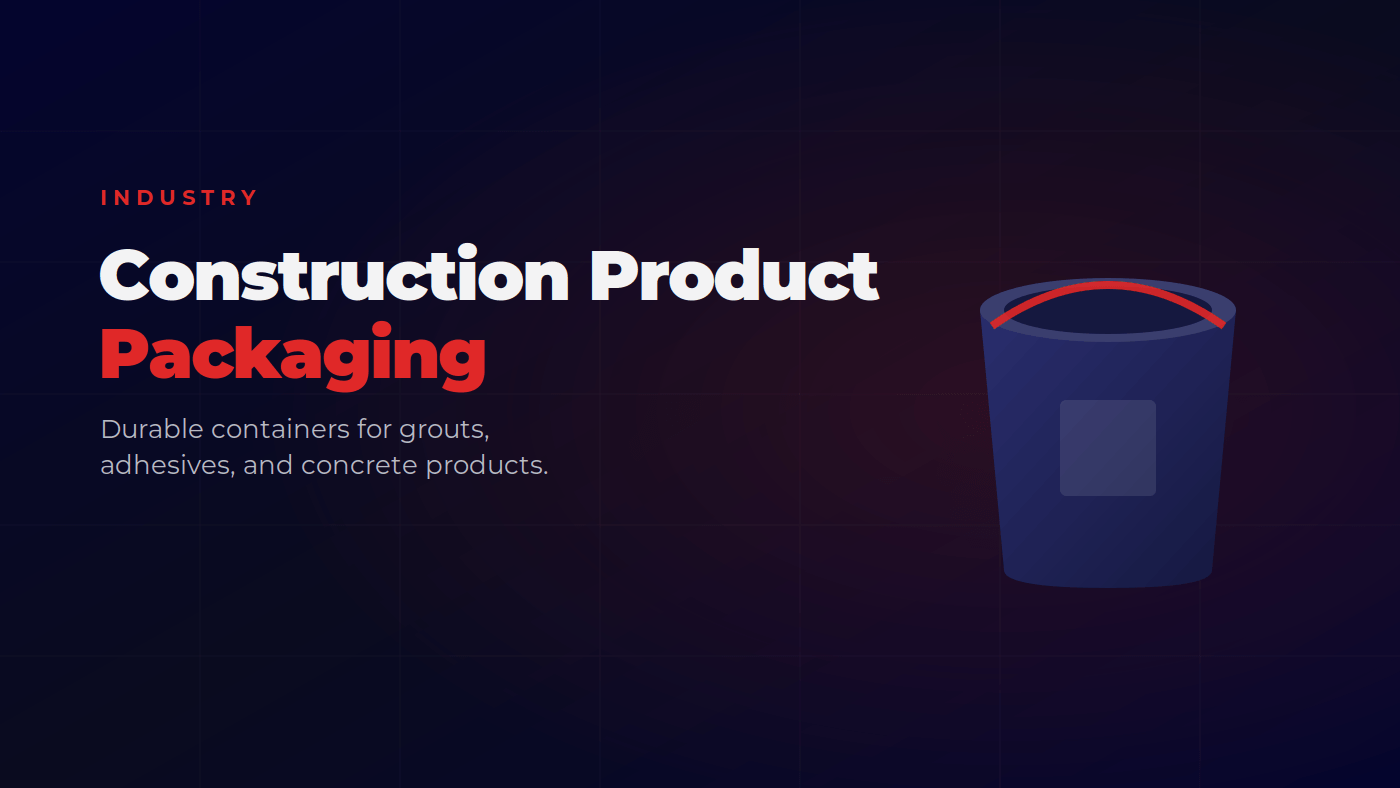
Construction Product Packaging Guide

Table of Contents
Construction product packaging gets tested in ways that lab products never experience. The container gets dropped off a truck, stacked in a yard, left in the sun and rain, dragged across a slab, opened and resealed a dozen times, and hauled up a ladder by the handle. And it's often heavy, because the products inside, the grouts, mastics, concrete additives, and adhesives, tend to be dense. A container that performs perfectly in a clean warehouse can fail completely on a jobsite if it wasn't built and specified for those conditions.
This guide covers what construction product packaging actually requires: how product weight drives container specification, why jobsite durability and resealability matter so much, the container formats common to the category, and how brand presentation affects a product sold to contractors. If you want broader context on container types and materials first, start with our Complete Guide to Rigid Packaging.
Why Construction Products Are Demanding to Package
Construction and concrete products present a specific combination of challenges that sets the category apart, and most of it comes down to two things: the products are often heavy, and they live in a punishing environment.
Weight is a defining factor. Many construction products, particularly grouts, mastics, concrete additives, and dense adhesives, are significantly heavier per unit volume than typical liquids. A five-gallon pail of a dense construction product can be heavy enough that the container, the handle, and the closure all have to be rated for the load. A container that would hold a light liquid fine can fail under the weight of a dense construction material, whether by handle failure, wall deformation, or seal compromise.
The environment is unforgiving. Construction products are stored and used in conditions that test packaging hard: outdoor storage, temperature extremes, UV exposure, rough handling, stacking, and the general abuse of an active jobsite. The container has to survive all of it while keeping the product usable and the label legible.
Many are used over multiple sessions. A contractor rarely uses an entire pail of a product at once. Containers are opened, partly used, resealed, and reopened, sometimes over days or weeks. That makes the reseal function genuinely important, because a container that doesn't reseal well lets the product skin, cure, or dry out between uses.
Weight and the Container Specification
Because so many construction products are heavy, getting the weight rating right is one of the most important parts of packaging in this category, and one of the most commonly underappreciated.
Every container has a gross weight it's designed to hold safely, and for dense construction products that limit can be reached at a smaller volume than buyers expect. The container wall thickness, the strength of the handle or bail, and the integrity of the closure all have to be matched to the actual filled weight. A pail bail that's adequate for a light product can bend or fail under a dense one, and a contractor carrying a heavy pail by a failing handle is both a product problem and a safety problem.
For hazardous construction products, the weight consideration intersects with regulatory requirements: UN-certified containers are rated for a maximum gross weight, and the filled weight has to fall within that rating. But even for non-hazardous products, the weight rating matters for basic function and safety. Specifying a container rated comfortably for the filled weight, with a handle and closure to match, is fundamental in this category. For guidance on pail specification generally, see our Industrial Pail Buying Guide.
Jobsite Durability
Construction product packaging has to survive the jobsite, which is one of the harshest environments any packaging faces. Several factors determine whether it does.
Impact resistance matters because containers get dropped, knocked, and handled roughly. The container material and construction have to tolerate that abuse without cracking or failing. HDPE's toughness, particularly its impact resistance, is one reason it's so common for construction pails.
Stack strength matters because products are stacked in yards, on trucks, and in storage. The container has to bear stacking loads without deforming or collapsing, which protects both the product and the containers beneath it.
UV and weather resistance matter because construction products are frequently stored outdoors or in partially exposed conditions. The container and the label both have to resist degradation from sun and weather over the product's life.
Durable labeling matters because the label has to stay legible and attached through all of the above. A label that scuffs off or fades in the sun fails to do its job, which for construction products includes communicating use instructions and any safety information. This puts a premium on decoration methods that withstand abrasion, moisture, and UV, which we cover in our Packaging Decoration Methods guide.
Resealability and Product Protection
Because construction products are so often used over multiple sessions, the ability to reseal the container reliably is more important in this category than in many others.
A contractor who opens a pail of mastic, uses part of it, and reseals it expects the remaining product to be usable next time. If the closure doesn't reseal well, air and moisture reach the product between uses, and many construction products respond badly to that: adhesives and sealants skin or cure, cement-based products react with moisture, and others dry out or thicken. A poor reseal turns a multi-use product into a single-use one, wasting product and frustrating the user.
This makes the lid and closure system a central part of the packaging, not an afterthought. A pail with a lid that seals reliably on the second, third, and tenth opening protects the product through its working life and reflects well on the brand. The same considerations around cure and skinning that apply to adhesives and coatings apply to many construction products, which we cover in our Adhesive and Coatings Packaging guide.
Container Formats for Construction Products
Construction and concrete products ship in a range of formats driven by the product type, volume, and how it's applied. Here are the formats most common in the category.
| Container Format | Typical Use | Notes |
|---|---|---|
| Pails | Grouts, mastics, adhesives, coatings | The dominant format; weight rating and reseal are key |
| Cartridges and tubes | Sealants, caulks, construction adhesives | For caulk-gun and hand application |
| Drums | Bulk liquid construction products | Larger commercial volumes |
| Bags | Dry mortar, concrete mix, powders | Moisture protection is the key concern |
| Cans | Specialty coatings and adhesives | Trade and specialty applications |
Pails are the dominant format for construction products, from grouts and mastics to adhesives and coatings. The combination of weight rating, jobsite durability, and reliable reseal makes pail specification especially important here. Cartridges and tubes serve sealants, caulks, and construction adhesives applied by gun or hand. Drums handle larger liquid volumes, and bags serve dry products like mortar and concrete mix, where moisture protection is paramount. Cans serve specialty coatings and adhesives.
The dominance of the pail in this category is worth emphasizing: for construction products, getting the pail right, the right weight rating, the right durability, and the right reseal, addresses the majority of the category's packaging needs.
Brand Presentation in the Construction Market
Construction product packaging isn't only about function. In the construction market, contractors develop strong brand preferences and recognize the products they trust on the supply house shelf, which makes packaging presentation a real commercial factor.
A construction product in a clean, professionally decorated, durable container signals quality and reliability to a contractor making a purchasing decision, often quickly and based partly on the packaging. A faded, generic, or poorly finished container raises doubts. And because the container takes abuse on the jobsite, the decoration has to be durable enough to still look professional after handling, which connects brand presentation directly to decoration method and quality. For construction brands building loyalty in a competitive market, packaging that looks professional and holds up is part of the brand promise.
Where ILLING Fits In
Construction product packaging rewards a partner who understands the weight, the jobsite durability, the reseal requirements, and the brand presentation all at once. ILLING has spent 100 years helping manufacturers in demanding categories get their packaging right, and construction and concrete products are squarely in our experience.
We source the full range of construction product packaging, with particular depth in the pails that dominate the category, specified for the weight ratings, durability, and reliable reseal that dense jobsite products require. We decorate in-house with methods that hold up to jobsite abrasion, moisture, and UV, so your brand still looks professional after the container has been handled. We start with your specific product, its weight, its chemistry, and how it's used, rather than reaching for a general-purpose container. And our warehouse inventory and stocking agreements keep you supplied through demand cycles.
If you manufacture construction, concrete, or related products and want a packaging partner who understands what the jobsite does to a container, we'd like to hear about it.
For related guidance, see our Industrial Pail Buying Guide, our Adhesive and Coatings Packaging guide, and our Packaging Decoration Methods guide.
FAQs
What kind of packaging is used for construction products?
Construction product packaging is dominated by pails, which serve grouts, mastics, adhesives, coatings, and many other products, with weight rating, jobsite durability, and reliable reseal being the key specification factors. Cartridges and tubes handle sealants, caulks, and construction adhesives applied by gun or hand. Drums serve larger liquid volumes, bags serve dry products like mortar and concrete mix where moisture protection matters most, and cans serve specialty coatings and adhesives. Because construction products are often heavy and used in punishing jobsite conditions, the container has to be specified for the actual filled weight and built to survive rough handling, outdoor storage, and repeated opening and resealing.
Why does product weight matter for construction packaging?
Product weight matters because many construction products, especially grouts, mastics, concrete additives, and dense adhesives, are significantly heavier per unit volume than typical liquids, and a container's gross weight limit can be reached at a smaller volume than buyers expect. The container wall, the handle or bail, and the closure all have to be rated for the actual filled weight. A handle adequate for a light product can bend or fail under a dense one, which is both a product problem and a safety problem when a contractor is carrying or lifting the container. For hazardous products, the weight also has to fall within the container's UN certification rating. Specifying a container rated comfortably for the filled weight, with a matching handle and closure, is fundamental in this category.
Why is resealability important for construction product packaging?
Resealability is important because construction products are frequently used over multiple sessions rather than all at once. A contractor opens a pail, uses part of the product, reseals it, and returns to it later, sometimes over days or weeks. If the closure doesn't reseal reliably, air and moisture reach the product between uses, and many construction products respond badly: adhesives and sealants skin or cure, cement-based products react with moisture, and others dry out or thicken. A poor reseal effectively turns a multi-use product into a single-use one, wasting product and frustrating the user. This makes the lid and closure system a central part of construction product packaging rather than a secondary consideration.
What makes a container durable enough for a jobsite?
Jobsite durability comes down to several factors: impact resistance so the container survives being dropped and knocked, stack strength so it bears stacking loads without deforming, UV and weather resistance so it holds up to outdoor storage, and durable labeling so the label stays legible and attached through all of it. HDPE is common for construction pails partly because of its toughness and impact resistance, especially in cold conditions. The decoration also has to be durable, since a label that scuffs or fades fails to communicate use and safety information and undermines the brand. A container built for the jobsite addresses all of these rather than just holding the product under ideal conditions.
Does packaging affect how construction products sell?
Yes. In the construction market, contractors develop strong brand preferences and recognize trusted products on the supply house shelf, which makes packaging presentation a real commercial factor. A construction product in a clean, professionally decorated, durable container signals quality and reliability to a contractor making a quick purchasing decision, while a faded or generic container raises doubts. Because the container takes abuse on the jobsite, the decoration also has to be durable enough to still look professional after handling, which connects brand presentation directly to decoration quality. For construction brands competing for contractor loyalty, packaging that looks professional and holds up is part of the brand promise.