262-250-7566
 Request a quote
News & insights.
What we’re learning, what we’re seeing, and the occasional story from the floor: packaging trends, supply-chain notes, and compliance updates we wish we’d known sooner.
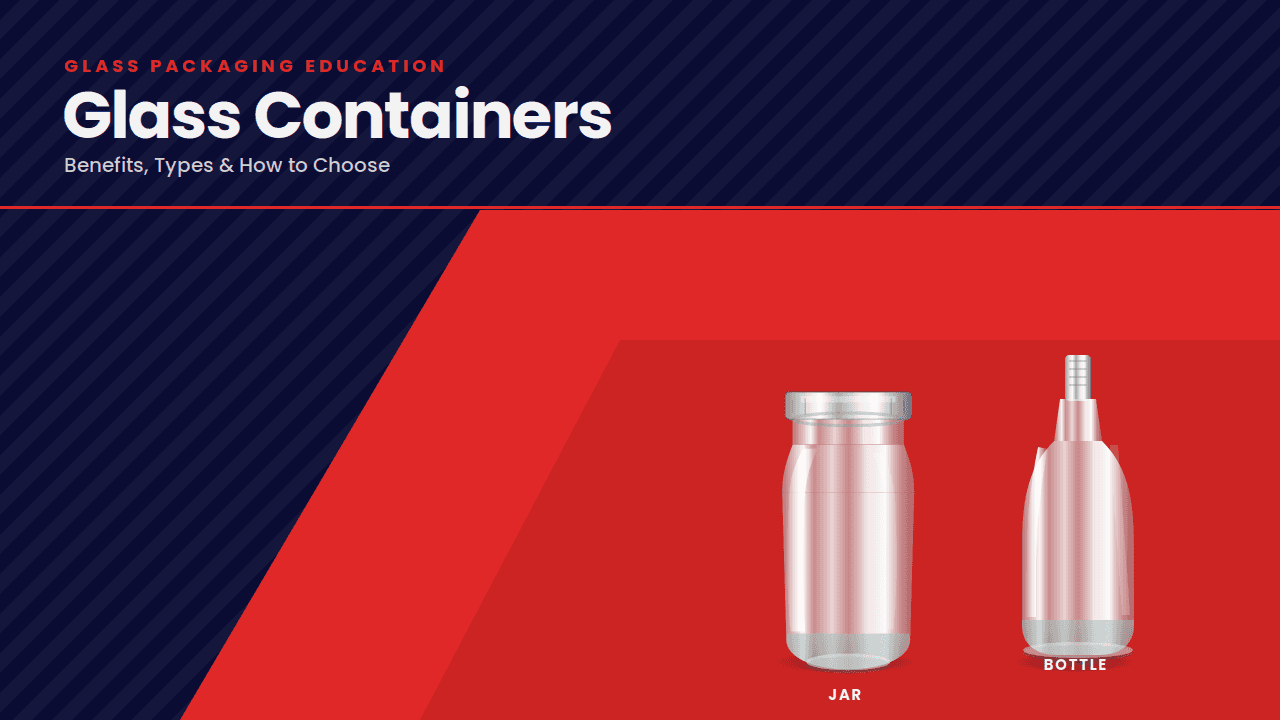
Glass Containers: Benefits, Types & How to Choose

Table of Contents
Glass containers have remained one of the most trusted packaging materials across food, beverage, personal care, pharmaceutical, and specialty markets for a simple reason: they deliver dependable product protection while creating a premium customer experience. Whether you are selecting packaging for a food product, a specialty beverage, or a pharmaceutical application, understanding what sets glass apart and how to choose the right type makes all the difference.
While packaging trends continue to evolve, glass remains a preferred choice for businesses looking to protect product quality, enhance shelf appeal, and support long-term brand value. This guide breaks down the key advantages of glass containers, the different types available, and the factors that should drive your selection. For broader context on packaging materials and container formats, start with our Complete Guide to Rigid Packaging.
Protecting Product Quality
One of the biggest advantages of glass containers is their ability to preserve the integrity of the product inside.
Glass is nonporous and chemically stable, meaning it will not absorb flavors, odors, or ingredients from the product it contains. It also will not transfer materials into the product over time. This makes glass an excellent choice for applications where freshness, consistency, and purity are critical requirements.
For food, beverage, personal care, and pharmaceutical products, dependable product protection is often the primary reason businesses choose glass over alternative materials. When the integrity of what is inside the container matters and when contamination or flavor transfer simply is not acceptable glass is difficult to match.
Strong Barrier Protection
Glass containers provide an effective barrier against oxygen, moisture, and other outside elements that can impact product quality over time.
This barrier protection helps support shelf life and maintain product performance throughout storage, transportation, and distribution. For products sensitive to environmental conditions whether temperature fluctuation, humidity, or light exposure this level of protection offers an added layer of confidence and reliability that other materials may not.
The result is a container that does not just hold a product but actively works to protect it from the moment it is filled to the moment it reaches the end customer.
A Premium Look and Feel
Packaging is often the first thing a customer notices about a product, and first impressions drive purchasing decisions. Glass containers offer a level of clarity, weight, and presentation that is widely associated with quality and craftsmanship.
Whether displayed on a retail shelf, used in a professional setting, or shipped directly to a consumer, glass creates a premium appearance that enhances brand perception and builds customer confidence. Many businesses choose it specifically because it allows the product itself to become part of the presentation showcasing colors, textures, and visual appeal in a way that plastic and metal containers often cannot replicate.
For brands where perception and shelf presence matter, glass packaging is a powerful tool.
Sustainable Packaging Benefits
Glass is widely recognized as a recyclable packaging material and continues to be a popular choice for companies with active sustainability initiatives.
Because glass containers can be recycled and reused without compromising their performance or purity, many businesses view them as a dependable option when balancing packaging performance with environmental responsibility. Unlike some materials that degrade in quality through the recycling process, glass maintains its properties through repeated cycles.
For businesses looking to align their packaging decisions with broader sustainability goals, this makes glass a credible and well-recognized solution.
Choosing the Right Type of Glass
Not all glass containers are the same. Different colors, styles, and configurations serve different purposes depending on the product and application.
Glass Type | Best For | Key Benefit |
Clear glass | Food, beverage, personal care | Maximum product visibility |
Amber glass | Pharmaceuticals, essential oils, specialty products | Protects against light exposure |
Cobalt blue glass | Specialty and premium products | Distinctive shelf presence |
Green glass | Wine, beer, olive oil | Partial light protection, traditional aesthetic |
Specialty glass | Custom brand applications | Unique appearance and differentiation |
When selecting glass containers, consider:
- Whether your product is sensitive to light exposure
- The shelf and retail environments where the product will be displayed
- Your branding objectives and target customer experience
- Closure and neck finish compatibility
- Distribution and transportation requirements
Selecting the right glass containers involves evaluating the product, storage environment, branding objectives, and distribution requirements together not in isolation.
Is Glass Right for Your Application?
While glass containers offer significant advantages, it is important to consider the complete packaging system before making a final decision. Glass is not the right answer for every application, and the factors below should be weighed carefully.
- What is your product? Food, beverage, pharmaceutical, and personal care products are common fits for glass containers. Products requiring lightweight, flexible, or unbreakable packaging may be better served by alternative materials.
- What are your transportation and handling requirements? Glass is heavier than plastic and requires appropriate cushioning and packaging support to prevent breakage in transit.
- What are your storage conditions? Glass performs well across a wide range of storage environments, but temperature cycling and physical handling conditions should be evaluated before committing to a container format.
- What closure and neck finish do you need? Glass containers come in a wide range of neck finishes and closure options. Confirming compatibility between the container and closure is an essential part of the selection process.
- What are your branding and decoration goals? Glass supports a range of decoration options including labels, screen printing, and embossing, each of which can enhance shelf presence and brand recognition.
Working through these questions in order helps identify whether glass containers are the right fit — and if so, which type and configuration best supports your product and your goals. The businesses that get the most out of glass packaging are those that approach the selection process with the full picture in mind, from fill to shelf.
Where ILLING Fits
For nearly 100 years, ILLING has helped businesses identify packaging solutions designed around their products, operational needs, and long-term goals. Our glass containers include a wide range of sizes, styles, neck finishes, and colors to support diverse applications across food, beverage, pharmaceutical, chemical, and specialty markets.
Because business IS personal, we take time to understand your application and provide solutions backed by extraordinary attention helping you select packaging that protects your product and supports your brand with confidence.
FAQs
What Are Glass Containers Used For?
Glass containers are used across wide range of industries including food, beverage, pharmaceutical, personal care, and specialty markets. Common applications include jars for sauces and condiments, bottles for beverages and oils, vials for pharmaceuticals, and specialty containers for premium personal care products.
What Is the Difference Between Clear, Amber, and Colored Glass Containers?
Clear glass containers offer maximum product visibility and are ideal when the appearance of the product itself is part of the customer experience. Amber glass blocks ultraviolet light, making it the preferred choice for products sensitive to light exposure such as pharmaceuticals and essential oils. Colored glass options like cobalt blue or green serve both functional and aesthetic purposes depending on the product and brand.
Are Glass Containers Safe?
Yes. Glass containers are nonporous and chemically stable, meaning they will not absorb flavors, transfer materials into the product, or react with food or beverage contents. Glass is widely recognized as one of the safest materials for direct food contact and is approved for use across food and pharmaceutical applications
Are Glass Containers Recyclable?
Yes. Glass containers are fully recyclable and can be recycled repeatedly without any loss of quality or purity. This makes glass a strong choice for businesses with sustainability goals or those seeking packaging materials that align with environmental responsibility initiatives.
How Do I Choose the Right Glass Container for My Product?
Start by evaluating your product type, filling conditions, storage environment, closure requirements, and any applicable regulations. Consider whether your product is sensitive to light, what neck finish and closure you need, and what your branding, and shelf presence goals are. Working through these factors in order rather than starting with cost will lead you to the right glass container for your application.